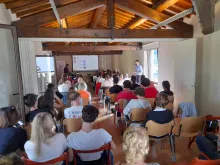
The project aimed at redefining civil protection in Lucca (Italy) by involving citizens, institutions, schools and associations in an unprecedented participatory process to upldate the Local Civil Protection Plan; it also developed innovative guidelines for participation to serve as a model for the regional level. It transformed the way the community prepares for and responds to emergencies, promoting collaboration, innovation and awareness. Through active engagement at both municipal and inter-municipal levels, the project was dedicated to creating a ore inclusive, transparent, and effective civil protection system.
Map
Civà - Cittadinanza Impegnata, Volontariato attivo
General Information
The CiVà Project – Engaged Citizenship, Active Volunteering was developed with the aim of updating the Municipal Civil Protection Plan of the Municipality of Lucca, in accordance with the National and Regional law, through a participatory process involving citizens, institutions, associations, economic operators, and schools. Funded by the Tuscany Region and co-funded by the Municipality of Lucca, the project sought to create tools and consolidate practices for a structured involvement of citizens in Civil Protection planning, addressing territorial vulnerabilities and promoting inclusion.
The participatory process was based on the nine core principles for civil participation of the Council of Europe, with an emphasis on accessibility, non-discrimination, inclusiveness, transparency, and openness. The adopted methodology included the organization of public meetings, thematic workshops, and awareness-raising and training activities.
The territory of the Municipality of Lucca presented challenges related to territorial cohesion, with particular critical issues in peripheral districts. The project addressed the need to improve the inclusion of the most vulnerable groups in Civil Protection planning, proposing a participatory planning model capable of integrating diverse needs into the process of updating the plan.
Hazard Type
Geographical Scope - Nuts
Geographical Scope
Population Size
Population Density
Needs Addressed
The project addressed the need of the Municipality of Lucca of updating the Local Civil Protection Plan.
The project addressed the need to improve the inclusion of the most vulnerable groups in Civil Protection planning, proposing a participatory planning model capable of integrating diverse needs into the process of updating the plan.
One of the project’s objectives was the establishment of the Local Resilience Council (LRC), a new participatory mechanism designed to support the decision-making processes of the Municipality of Lucca.
The LRC serves as a consultative body for the local administration on issues related to participation and resilience, as well as an innovative participatory tool for Civil Protection planning processes. It was created to actively involve both civil society and the municipal administration in the review and updating of Lucca’s Civil Protection Plan.
The LRC functions as an instrument of active participation in the development of local policies on resilience and civil protection. Membership is voluntary and is based on the heterogeneity of its participants, ensuring the inclusion of the full range of knowledge, skills, and specific characteristics of the local territory.
The LRC aims to contribute to the launch of a continuous improvement process for the Civil Protection Plan, grounded in public awareness-raising and sustained dialogue with citizens, local associations, institutions, and all relevant territorial stakeholders.
Emergency preparedness was developed at the local planning level through a participatory approach. The main steps included updating emergency areas and analyzing alert systems, drafting the Civil Protection Plan, engaging stakeholders, and involving schools. The activity was finally validated through a Citizen Jury.
The primary objective of CiVà’s participatory process was to update the Municipal Civil Protection Plan of the Municipality of Lucca, integrating the existing plan with local priorities and needs related to prevention and protection measures. A cross-cutting objective was to ensure a high level of citizen involvement, increase risk awareness, and promote integrated action among citizens, the community, and local authorities.
The regulatory framework on which Civil Protection planning in Italy is based provides for the establishment of a dialogue between citizens and the public administration responsible for Civil Protection planning, with the aim of proposing amendments to planning documents, thereby making administrative action more effective and transparent.
The CiVà project provided, prior to the launch of participatory activities, for an in-depth stakeholder analysis, taking into account the categories listed by law while at the same time expanding the list to include additional institutions, entities, economic operators, and civil society organizations relevant to the context of Lucca and to the theme addressed by the project. This methodology proved to be appropriate to the subject matter of the participatory process and to the scale of involvement, making it possible to ensure transparent, broad, and inclusive participation, while at the same time complying with the requirements imposed by national legislation on civil protection.
The engagement methods developed were:
- Co-design of the participatory process (focus groups, information campaign with schools)
- Updating of emergency areas and analysis of alert systems (participatory mapping, site inspections)
- Drafting of the Participatory Civil Protection Plan (collaborative writing)
- Citizens’ jury (structured consultation)
The degree of involvement in the decision-making process was positioned at the level of co-design of the strategy and the action plan by stakeholders, through the pilot implementation of the Local Resilience Council, as a new participatory mechanism supporting the Municipality. The involvement was differentiated according to the types of actors and the phase of the planning process (analysis, drafting, and evaluation).
The project achieved several significant results, including improved awareness and preparedness of the local community in relation to emergencies, stronger collaboration among entities, institutions, and civil society in Civil Protection planning, and the development of innovative participatory tools, such as digital platforms for reporting critical issues and managing emergencies.
The participatory process generated strong interest and engagement from the community and the stakeholders involved, and highlighted the need to ensure continuity in citizen involvement in future phases of emergency planning and management. This need has been acknowledged by the Municipality of Lucca, which intends to pursue this priority in the coming years.
Vulnerable Groups
Governance
Emergency Preparedness
Infrastructure Readiness
Engagement Level
Empowerment Level
Implementation
The establishment of the Local Resilience Council, a consultative body on participation and resilience issues for the local administration of Lucca, represents the project’s most innovative element with regard to defining Civil Protection planning processes. This body was created to actively involve civil society and the municipal administration in the process of reviewing and updating Lucca’s Civil Protection Plan.
Italian
Municipality of Lucca
The Municipality of Lucca is in charge of drafting, designing, approving and implementing the Local Civil Protection Plan.
Municipal level
1. Institutional actors
- Municipal Operations Center (COC)
- Civil Protection Service (CP)
- Managers and staff from other departments of the Municipality of Lucca
- Members of the Municipal Council and Municipal Government
- Public security and emergency response authorities
2. Civil society
- Economic sectors (trade associations, Chamber of Commerce, businesses)
- Civil Protection volunteers
- Volunteer associations / civil society organizations
- Schools of all levels
- Citizens
- Organizations operating in the field of civil protection
Inter-municipal level
3. Institutional actors
- Tuscany Region
- Prefecture
- Province
- Neighboring municipalities relevant to the local risk context (COC – Municipal Operations Center / Civil Protection Service / Mayors)
4. Civil society
- Schools of all levels
- Associations / civil society organizations
- Productive activities / economic sectors
- Citizens
Phase 1 – Preparation of the Participatory Process
1.1 Training
1.2 Mapping and analysis
1.3 Engagement
Phase 2 – Implementation of the participatory process
2.1 Co-design of the participatory process
2.2 Participatory Civil Protection planning
2.3 Validation and deliberative processes
Phase 3 – Feedback and legacy management
3.1 Feedback and dissemination
3.2 Sustainability and multiplier effect
In addition to its own funds for ordinary operations, the Municipality of Lucca benefited from funding provided under Regional Law No. 46/2013 of the Tuscany Region – Regional Authority for the Guarantee and Promotion of Participation in Tuscany – Regional support for local participatory processes.
Phase 1 – Preparation of the Participatory Process: 2 months
Phase 2 – Implementation of the participatory process: 3 months
Phase 3 – Feedback and legacy management: 1 month
Experience of the Implementing Organisation in DRM
Target Audience
Resources Required
Timeframe & Phases
Participation Results
Lessons learned are mostly linked to the need of ensuring the sustainability of the project, and in particular of the participatory process. The main elements intended to guarantee the continuity of the project actions are:
- Local Resilience Council (CRL): An innovative body composed of community representatives, created to amplify and multiply the project’s results over time and ensure continuous community participation in decision-making processes. This body has been proposed to the entire Municipal Administration as a standard operational tool for consolidating a participatory governance system across the Municipality’s services. The CRL model allows for greater transparency and accessibility of information.
- Development and adoption of Guidelines for the promotion of participation: Designed to incentivize participation, these guidelines are conceived as a pilot experiment for the Tuscany Region, with the ambition of serving as a model for developing additional regional guidelines in the field of civil protection. This strategy aims to become a reference document to incorporate a participatory approach in every decision-making process of the Municipality of Lucca, promoting the building of a more resilient community.
- Sharing experiences and lessons learned with the support of Council of Europe channels and tools: including the CiVà experience in SYNERGIES Atlas is part of the dissemination effort pursued after the end of the project, with the aim of facilitating the exchange of good practices in civic participation between civil society organizations and public authorities.
- Dissemination and feedback initiatives: Further activities for disseminating and sharing results were claimed in the Final report, both at the municipal and inter-municipal levels, to spread good practices, inform, and raise citizen awareness on participation and civil protection. These initiatives were intended to stimulate the development of new participatory projects, create a network of actors with common interests, and potentially influence surrounding areas as well.
During the participatory process for updating the municipal Civil Protection plan in the CiVà project, the following obstacles were encountered:
Diversity and availability of stakeholders: The large number and diversity of identified and involved stakeholders was characterized by a gap in time availability, especially considering the roles of the stakeholder representatives (professional or voluntary roles).
Solution adopted: A flexible approach was adopted in scheduling meetings and activities, and hybrid participation in meetings, workshops, and focus groups was encouraged. This included organizing sessions at different times to accommodate the needs of as many participants as possible. In addition, some meetings were recorded to allow those unable to attend to watch them later and provide feedback via online platforms.- Managing expectations and communication with participants: An obstacle was represented by the management of divergent expectations among stakeholders, who often had different interpretations of the project’s objectives and expected benefits. Effective communication between different groups remains a complex issue, especially in highly specialized fields such as civil protection.
Solution adopted: After the initial phase of the project, the communication strategy was revised to enable clearer and more direct communication, including preliminary informational meetings to explain the project’s objectives and participatory procedures. Communication efforts were further strengthened with the support of the press and communications office of the Municipality of Lucca.
Risk & Mitigation Plan
Scalability and Sustainability
Sustainability issues are explored in the previous session related to "Lessons learned"
The Local Resilience Council (CRL), as a consultative body, represents a high-impact participatory tool that can be replicated in other sectors of the Municipality of Lucca and/or other local institutions to develop participatory pathways in decision-making processes.
Furthermore, the update of the Municipal Civil Protection Plan of the Municipality of Lucca using a participatory approach represents an innovative example of redefining a Civil Protection Plan at the national level. The new legislation indeed provides for the updating of civil protection plans through citizen involvement, and the experience of the Municipality of Lucca serves as an example not only locally and provincially, but also at the regional and national levels.
Finally, through the development and adoption of the Guidelines for the Promotion of Participation, the CiVà experience will enable the adoption of a participation-oriented approach in every decision-making process of the Municipality of Lucca.
The estimated direct project costs at the outset of the project were €40,000.
N/A