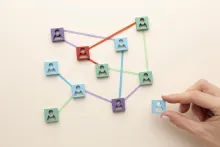
The Lombardy Regional Network of Civil Protection Promotion Centers is a multi-provincial institutional programme coordinating 13 school networks across all Lombardy provinces, encompassing over 270 primary and secondary schools, to systematically integrate civil protection education into the regional school curriculum through teacher training, age-appropriate educational materials, student activities, and institutional collaboration between the education and civil protection sectors.
Map
Regional Network of Civil Protection Promotion Centers
General Information
ISIG
A network coordinating primary and secondary schools to integrate civil protection education into the curriculum through teacher training, age-stratified educational materials, curriculum development, and systematic engagement with civil protection volunteer organizations.
Established in 2016 through collaboration between the Regional School Office for Lombardy and Lombardy Region Civil Protection, the network has evolved through multiple multi-year agreements and currently operates under the 2025-2027 framework mandated by Regional Law 27/2021 (article 24) on civil protection training and culture dissemination, aligned with national Law 92/2019 introducing civic education as a mandatory school subject. The 13 CPPC are located in the provinces of Bergamo, Brescia, Como, Cremona, Lecco, Lodi, Mantova, Milano (two separate networks: Cinisello Balsamo and Pioltello), Monza and Brianza, Pavia, Sondrio, and Varese. Each CPPC functions as a provincial coordination hub connecting schools, civil protection authorities, volunteer organizations, and territorial institutions.
The initiative's comprehensive online platform hosts age-differentiated educational materials organized by school level: preschool/kindergarten, ages 3-6; primary, ages 6-11; lower secondary, ages 11-14: and upper secondary, ages 14-19, plus dedicated sections for civic education curriculum integration materials and "The Geologist in Schools" programme addressing seismic and geological hazards specific to Lombardy.
Lombardy, Italy's most populous and economically significant region, faces multi-hazard exposure including seismic risk (particularly in provinces bordering Emilia-Romagna and Veneto), hydrogeological risks (floods and landslides especially in Alpine and Prealpine areas), industrial/technological risks (given high industrial concentration), and increasingly frequent climate-related extreme weather events.
Despite Italy's advanced institutional civil protection system, systematic integration of DRR education into school curricula remained limited and fragmented prior to 2016. Teachers lacked civil protection training and pedagogical resources; no structured coordination existed between education and civil protection sectors at regional/provincial levels; and schools' civil protection engagement was ad hoc rather than institutionalized. The legal reforms (especially Law 92/2019) created both opportunity and obligation, but required operational frameworks - hence the CPPC model.
Multiple converging national policy developments created the enabling environment for the CPPC initiative:
- "Good School" reform positioned schools as "laboratories of active citizenship education," emphasizing openness to external territory and institutional/volunteer organizations;
- Protocol of Intent between the Ministry of Education and the Presidency of the Council of Ministers promoting integrated actions for safety and civil protection culture dissemination in schools;
- Law 92/2019 mandating civic education as a school subject, requiring "basic training in civil protection" delivered by trained teachers capable of collaborating with the civil protection system;
- Civil Protection Code emphasizing formation and culture dissemination as core civil protection functions;
- National campaigns: Department of Civil Protection's "I Don't Risk School", targeting primary schools with volunteer-led methodology, and "I Too Am Civil Protection" residential camps for ages 10-16.
Hazard Type
Geographical Scope - Nuts
Geographical Scope
Population Size
Population Density
Needs Addressed
- Limited systematic integration of civil protection in school curricula;
- Insufficient teacher capacity in DRR topics;
- Weak institutional linkages between education and civil protection sectors;
- Need to operationalize civic education law requirements;
- Fragmented educational resources.
Direct target population: Children and youth (ages 3-19). The programme recognizes this group as doubly significant: (1) vulnerable — children have limited autonomous protective capacity, depend on adults, and experience higher psychological impacts from disasters; and (2) agents of change — children and youth can influence household preparedness behaviors, communicate civil protection knowledge to family members, and represent the future generation of civil protection volunteers and informed citizens
Secondary Reach: 1) Elderly population: Reached indirectly through student-family communication, and directly through National Civil Protection Week public awareness campaigns where CPPC schools open to community. Educational materials emphasize protective measures for elderly (evacuation assistance, medication/medical equipment in emergency kits, heat wave protocols for seniors living alone). 2) People with disabilities: Inclusive preparedness principles integrated into curriculum materials, addressing: evacuation procedures accommodating mobility limitations, communication accessible to sensory disabilities, family emergency plans accounting for special needs, community support systems for disabled persons during emergencies. The CPPC's emphasis on "active citizenship" within civic education framework explicitly includes disability inclusion.
The CPPC operates through a three-tier centralized governance model with clear hierarchical coordination:
- Joint governance by Lombardy regional civil protection authority and the regional education authority, part of national Ministry of Education. These two regional authorities establish: overall policy framework through formal multi-year conventions; legal basis; funding allocation; quality standards; curriculum guidelines; teacher training frameworks; digital platform specifications. All strategic decisions made at regional level.
- Provincial Operational Coordination: 13 provincial CPPC networks function as "provincial steering committees" implementing regional framework at provincial level. Each CPPC: designated lead school coordinates network; adapts regional guidelines to provincial hazard profiles and needs; coordinates with provincial education offices and territorial civil protection authorities; facilitates volunteer organization engagement; provides support to member schools; reports to regional coordination. Provincial CPPC have implementation autonomy within regional parameters but do not set independent policy.
- School implementation (within framework): individual schools implement CPPC within established curriculum guidelines. Schools exercise limited autonomy: choosing whether to create dedicated civil protection courses vs. integrated approach; selecting partnerships with specific volunteer organizations; designing specific classroom activities and events; adapting materials to local school context. Schools cannot opt out of civic education mandate, but have some flexibility in how civil protection content is delivered.
Lombardy operates within Italy's advanced National Civil Protection Service. Italy's system is internationally recognized as one of the world's most sophisticated, integrating national, regional, provincial, and municipal authorities with extensive volunteer organization networks, technical/scientific agencies, and operational forces. Therefore, The CPPC rather builds public preparedness culture and school-community readiness to complement institutional response: educating citizens on how to access/utilize existing civil protection system; promoting self-protection and household preparedness reducing emergency service demand; building social capital through volunteer recruitment; creating resilience culture supporting institutional preparedness investments.
The case targets the preparedness gap between advanced institutional capacity and variable public awareness/household readiness.
Lombardy, as Italy's wealthiest and most industrialized region, possesses highly developed infrastructure across all sectors relevant to the CPPC programme - from educational infrastructure, through civil protection infrastructure and digital infrastructure to transportation infrastructure.
The CPPC Programme:
- Leverages existing infrastructure rather than building new (uses school buildings, civil protection facilities, volunteer organizations' resources).
- No infrastructure development required for programme operation.
- Focuses on human capacity and organizational coordination utilizing developed physical infrastructure base.
- Digital platform (website) is only new infrastructure created specifically for programme, relatively modest investment compared to physical infrastructure.
- Knowledge and capacity building: Transfer civil protection technical knowledge (hazards, protective measures, emergency procedures, system organization) to students and teachers who previously lacked this expertise.
- Behavior change: Promote adoption of household preparedness behaviors (emergency kit assembly, family emergency planning, protective actions during hazards, appropriate emergency service utilization).
- Institutional collaboration: Strengthen structural linkages between education sector, civil protection authorities, and volunteer organizations, transforming ad hoc relationships into sustained partnerships.
- Culture development: Build long-term preparedness culture where civil protection awareness is normalized part of civic education and community life rather than exceptional/crisis-driven.
- Civic participation: Connect youth to volunteer organizations and active citizenship opportunities, creating potential recruitment pipeline for civil protection volunteers.
- Family/community extension: Use students as communication channels reaching households and broader community with preparedness messaging.
- Teachers participate through multi-day training workshops delivered by civil protection technical experts, collaborative curriculum development sessions, provincial CPPC coordination meetings for peer exchange, and access to a curated digital resource platform. Training is recognised as formal continuing professional development.
- Students engage through teacher-led civic education lessons integrating civil protection content; practical activities including emergency kit assembly, family emergency plan development, and local risk mapping; demonstrations by civil protection volunteers with equipment; field visits to operational centres, weather stations, and emergency coordination rooms; evacuation drills and decision-making simulations; and PCTO work-study placements (upper secondary) with volunteer organisations providing direct operational exposure.
- Schools join provincial CPPC networks through formal agreements, with lead schools coordinating provincial networks and individual schools retaining autonomy over implementation approach (dedicated courses versus integrated content).
- Volunteer organisations engage as expert content contributors, delivering demonstrations, hosting field visits, supervising PCTO placements, and participating in provincial coordination meetings. Families are reached indirectly through student-led family emergency planning tasks and directly through National Civil Protection Week open school events.
Students gain operational empowerment through knowledge, skills, and preparedness self-efficacy rather than programme governance. Teachers exercise moderate implementation autonomy — adapting materials, designing activities, contributing input at provincial meetings — within a centrally determined framework. Schools choose their implementation approach within the civic education mandate. Provincial CPPC networks identify local training priorities and coordinate territorial partnerships but implement regional policy rather than setting independent direction. Volunteer organisations shape content through operational expertise and mentoring but hold an advisory and delivery role.
- At student level, the programme builds knowledge (understanding local hazards, protective measures, and the civil protection system), practical skills (emergency kit assembly, family planning, evacuation route identification, emergency contact use), preparedness confidence, and civic identity — with a volunteer pathway offering tangible ongoing engagement for upper secondary students.
- At teacher level, training creates recognised in-school civil protection specialists, builds institutional knowledge that persists beyond individual tenure, and connects teachers to a cross-school professional network with civil protection practitioners.
- At school level, embedded curriculum plans, documented materials, and established partnerships with civil protection authorities and volunteer organisations become lasting institutional assets surviving leadership changes.
- At household level, student-initiated family emergency planning aims to translate school learning into home preparedness behaviours, with students potentially educating parents and grandparents in a reversal of the traditional knowledge flow.
- At community level, cumulative exposure across student cohorts over many years contributes to a gradual normalisation of preparedness culture, while PCTO placements serve as a recruitment pipeline for the civil protection volunteer sector.
The programme's theory of change is explicitly long-term: immediate knowledge gains → household preparedness behaviours → volunteer recruitment → normalised preparedness culture → sustained community resilience.
Vulnerable Groups
Governance
Emergency Preparedness
Infrastructure Readiness
Engagement Level
Empowerment Level
Implementation
- Institutional network model: 13 provincial CPPC functioning as coordination hubs between education, civil protection, and volunteer organizations.
- Comprehensive age-stratified materials: Website hosts curated resources organized by educational level (preschool through upper secondary), ensuring age-appropriate pedagogy.
- Teacher capacity building: Training programmes for educators in civil protection content and pedagogy.
- Curriculum integration: Develops learning units for civil protection within civic education curriculum; some schools integrate dedicated civil protection courses.
- Volunteer engagement: Systematic involvement of civil protection volunteer organizations providing expertise, materials, and personnel.
- Work-study pathways: PCTO (Percorsi per le Competenze Trasversali e l'Orientamento) allowing upper secondary students to gain civil protection work experience.
Italian
The programme is jointly implemented by two regional public authorities operating under a formal multi-year Convention:
Regione Lombardia – Settore Protezione Civile manages one of Italy's most sophisticated regional civil protection systems, coordinating 200+ volunteer organisations and maintaining 24/7 emergency coordination capacity.
Ufficio Scolastico Regionale per la Lombardia manages 1,200+ schools serving approximately 1.2 million students, coordinates 13 provincial education offices, and implements national curriculum reforms.
Lombardy Region – Civil Protection Department's DRR experience spans 40+ years of emergency management — including responses to Po River flooding (2002), Emilia earthquake impacts (2012), recurring Alpine events, and COVID-19 — alongside public awareness campaigns. CPPC represents the formalisation of previously ad hoc school engagement into a sustained systematic programme.
Lombardy Regional School Office's DRR education experience before CPPC was limited (individual teacher initiatives, building evacuation safety); CPPC is the first systematic, curriculum-integrated, region-wide DRR education programme under its coordination.
Both organisations justify a "High" experience rating in DRRM — noting that systematic school-integrated DRR education was genuinely new in 2016, and the programme's 10-year evolution reflects iterative institutional learning rather than implementation of a pre-established model.
- Lombardy Region – Civil Protection Department (civil protection mandate, technical expertise, volunteer coordination, budget) and Regional School Office for Lombardy (education policy, curriculum integration, teacher professional development, school network management), jointly governing through a formal multi-year Convention (currently 2025–2027).
- 13 provincial CPPC networks, each anchored by a designated lead school, coordinating 15–30 member schools, supported by provincial education offices.
- 270+ primary and secondary schools, with school directors authorising participation and 1,500–2,500 teachers involved to varying degrees.
- 200+ registered civil protection volunteer organisations across Lombardy (including local civil protection groups, Italian Red Cross, Alpine Rescue, emergency radio operators) providing demonstrations, field visit hosting, and PCTO placements. Territorial civil protection offices at provincial and municipal level provide local hazard information and school-civil protection connections.
- Lombardy Geologists Association ("The Geologist in Schools" programme); EUCentre (seismic risk materials for primary schools); weather services and seismic monitoring agencies providing technical content.
- CPPC establishment — Provincial coordination structures created with school network agreements
- Teacher training — Civil protection content and pedagogy training for educators
- Curriculum development — Learning units designed for integration into civic education
- Material curation — Age-appropriate resources collected, developed, and hosted online
- Student activities — Classroom instruction, simulations, field visits to civil protection facilities
- Awareness campaigns — Public events during National Civil Protection Week
- Evaluation and coordination — Regular inter-provincial exchange, material updates
- Personnel: Regional coordination absorbed within existing staff time across both institutions. Provincial coordination managed primarily by lead school staff with CPPC as an additional responsibility. Teacher participation integrated into standard teaching hours under the civic education mandate. Civil protection practitioners deliver training from within operational duties; volunteer contributions.
- Infrastructure: Existing school buildings, civil protection operational centres, volunteer facilities, and provincial government spaces are used without new construction. The CPPC digital platform is the main infrastructure investment.
- Materials: Curriculum development materials produced by staff and teachers; Digital resources hosted on the platform.
The case represents a 10-year continuous operation across four phases:
- Conception and establishment (2015–2016): Partnership negotiations between Regione Lombardia and Ufficio Scolastico Regionale; first Convention signed; 10 provincial CPPC networks established; lead schools designated; initial ~100–150 schools enrolled.
- Initial implementation and proof of concept (2016–2019): First teacher training cycles; initial curriculum materials developed; volunteer organisation partnerships established; first student activities implemented; digital platform development begun. Key external context: November 2018 national Protocol of Intent between Ministry of Education and Civil Protection Department; August 2019 Law 92/2019 mandating civic education including civil protection content — transitioning CPPC from voluntary to curricular.
- Consolidation, legal embedding, and expansion (2019–2024): Law 92/2019 implemented in schools; Regional Law 27/2021 enacted with explicit school civil protection mandate (art. 24); three new provincial networks added (Como, Cremona, Lodi), achieving complete 13-province regional coverage; participating schools grew to 270+; comprehensive digital platform launched; Convention renewed for 2024–2026 (extended to 2025–2027).
- Mature implementation (2024–2027, current): Focus shifts from expansion to quality deepening — systematic teacher training cycles, material refinement, Pathways for Transversal Skills and Orientation Programme expansion, enhanced community outreach during National Civil Protection Week, and inter-provincial learning exchange. All 13 provincial networks fully operational with established annual implementation rhythms.
Each academic year follows a recurring cycle: September–October (planning, teacher training for new participants, National Civil Protection Week); November–June (curriculum delivery, field visits, PCTO placements, provincial coordination meetings); Spring (material updates, new school recruitment, end-of-year events); Summer (planning for next cycle, platform updates, reporting).
Experience of the Implementing Organisation in DRM
Target Audience
Resources Required
Timeframe & Phases
Participation Results
- Provincial Coordination Hubs Enable Scale with Quality: The 13 provincial CPPC hub model allows regional programme to reach 270+ schools while maintaining quality and local relevance. Hubs provide: quality oversight, local adaptation, coordination with territorial partners, problem-solving for implementation challenges.
- Age-Differentiated Materials Essential for Pedagogical Effectiveness: distinct materials for each level from preschool to upper secondary ensures content is developmentally appropriate and pedagogically effective.
- Digital Platform Creates Accessibility and Standardization: easy access for all network schools regardless of location, standardization of materials ensuring quality, efficient updates when content needs revision, repository for accumulated institutional knowledge.
- Systematic engagement with civil protection volunteer organizations provides: real-world operational expertise complementing teacher theoretical knowledge, demonstrations with actual equipment, potential volunteer recruitment pipeline, connections linking schools to broader civil protection community.
- Alignment with National Campaigns Leverages Existing Resources: nationally developed materials (avoiding duplication), standardized volunteer training, national visibility and legitimacy, connection to broader civil protection system.
- Challenge: Ensuring consistent quality and implementation fidelity across large, diverse, geographically dispersed school network spanning from Alpine villages to Milan metropolitan area. Adaptive strategies: Provincial CPPC coordination hubs conduct quality oversight; centralized digital platform provides standardized materials; teacher training ensures baseline capacity; inter-provincial exchange meetings share best practices; regional coordination monitors overall network performance.
- Challenge: Teachers face competing curricular demands and may lack intrinsic motivation for civil protection content; teacher turnover creates need for continuous training; sustaining teacher engagement long-term. Adaptive strategies: Training teachers as facilitators rather than relying on external experts creates sustained capacity; integration into mandatory civic education curriculum (Law 92/2019) reduces perception as "extra" burden; recognition of civil protection education as legitimate professional development; curated materials reduce teacher preparation burden.
- Challenge: Maintaining coordination, shared vision, and learning exchange across 13 provincial CPPC while allowing for local adaptation to diverse provincial contexts. Adaptive strategies: Regional coordination meetings bringing provincial leads together; multi-year agreements providing stable framework while allowing provincial implementation variation; provincial autonomy in identifying local training needs and priorities.
- Challenge: Coordinating with numerous volunteer organizations with varying capacity, ensuring their availability for school engagement, standardizing their educational approaches. Adaptive strategies: Integration of volunteer organizations at provincial CPPC coordination level; use of volunteer organizations for specialized demonstrations rather than as primary instructors; alignment with national campaigns that provide standardized volunteer training and materials.
- Risk: Civil protection education involving disasters, emergencies, and hazards could provoke anxiety or fear, particularly in young children (preschool/primary ages) or students with prior trauma exposure. Mitigation: Age-appropriate pedagogical approaches emphasizing empowerment and agency rather than fatalism; focus on practical preparedness actions students can take rather than dwelling on worst-case scenarios; trained teachers sensitive to student reactions; emphasis on how civil protection system protects citizens.
- Risk: Schools in some provinces may receive higher-quality implementation than others due to varying provincial CPPC capacity, volunteer organization density, or civil protection authority engagement. Mitigation: Regional coordination ensuring minimum standards; inter-provincial learning exchange identifying and sharing effective practices; digital platform providing equal access to materials regardless of provincial location; regional oversight of provincial CPPC performance.
- Risk: Programme impact may remain confined to school setting without extending to household preparedness or community resilience. Mitigation: Practical activities like family emergency plan development require home engagement; National Civil Protection Week events open to families/community; students as potential agents of household behavior change through knowledge transfer to parents; though evidence of household-level impact not documented.
Risk & Mitigation Plan
Scalability and Sustainability
1. Legal-Institutional Embedding: Programme is mandated by Regional Law 27/2021 article 24 and aligned with national Law 92/2019, making it a statutory requirement rather than discretionary project. This creates structural obligation continuing regardless of government changes or policy trends.
2. Core Budget Integration: Financed through stable institutional budgets of Lombardy Region and Regional School Office as part of their core mandated functions. Not dependent on external grants, donor funding, or competitive project awards that could end. Budget allocation is recurring annual commitment within multi-year agreements.
3. Multi-Year Agreement Framework: Successive multi-year formal agreements between Region and School Office provide legal certainty extending beyond annual budget cycles, time horizon enabling meaningful implementation and evaluation, basis for continued renewal (pattern of 2016 creation → 2024-2026 → 2025-2027 extension demonstrates recursive commitment).
4. Teacher Capacity as Sustained Asset: Investing in teacher training creates human capital asset that persists - trained teachers continue delivering content for years/decades; institutional knowledge embedded in schools survives individual teacher turnover through colleague mentorship.
5. Volunteer Organization Integration: Systematic engagement with volunteer organizations provides sustained operational expertise without requiring government to develop internal capacity.
6. Alignment with National Campaigns: Integration with national DPC campaign connects CPPC to broader national civil protection system, providing additional stability and legitimacy beyond regional level.
7. Demonstration Effect and Reputation: Success creates demonstration effect potentially attracting: additional schools wishing to join network, other Italian regions seeking to replicate model, national policy attention, research and evaluation interest, international learning exchange. Reputation becomes asset generating continued support.
The case is highly transferable to other Italian regions given: universal applicability of national legal framework (Law 92/2019 civic education, Legislative Decree 1/2018 Civil Protection Code), existence of regional school offices and civil protection authorities in all regions, similar institutional structures and school systems, potential for inter-regional learning from Lombardy experience
The model is conceptually transferable to other countries with similar institutional structures, but requires significant adaptation:
- Formal education system with regional/provincial administrative levels
- National or regional civil protection/emergency management institutional framework
- Legal basis for integrating DRR into school curriculum
- Civil society sector with volunteer organizations capable of school engagement
- Multi-year budget commitment capacity from public authorities
Technology plays a functional but non-essential supportive role through the digital platform:
- Material repository and distribution (could alternatively use printed materials, though less efficient)
- Communication among network participants (could alternatively use email lists, meetings)
- Visibility and transparency (public can view programme information)
Standard educational technology is needed: schools may use projectors, computers for lesson delivery; some materials may be interactive/multimedia (e.g., videos on risks)
Innovation is organizational and pedagogical through the network governance model, institutional embedding, teacher capacity-building approach, and age-stratified curriculum integration.
Low technology requirement means programme is accessible even in schools with limited digital infrastructure.
No public budget figures available. Initial development (2016) costs included: inter-institutional negotiation and agreement drafting; initial curriculum development; teacher training programme design; website platform development; initial material curation. These were absorbed within regular budgets of Lombardy Region Civil Protection and Regional School Office.
No official figures are publicly available. The description below is based on programme scope and structure.
Personnel: Regional coordination is absorbed within existing Lombardy Region Civil Protection and Regional School Office staff time; Provincial CPPC coordination across 13 networks relies primarily on lead school staff with coordination responsibilities, compensated through standard school functional arrangements; Teacher participation is integrated into standard civic education teaching hours.
Training: Covering trainer time, materials, and venues.
Digital platform and materials: Platform hosting and maintenance; New material development is variable; printed materials distributed across 270+ schools represent minimal per-school cost.
Student activities: Most activities use existing school facilities and civil protection resources.
Costs are likely distributed across regional, provincial, and school budgets with potential municipal co-financing, with no identified dependency on external or project-based funding.
- Legal Mandates Create Structural Durability: Embedding in Regional Law 27/2021 and alignment with national Law 92/2019 creates obligation continuing beyond political cycles.
- Core Budget Integration Over Project Funding: Programme financed through stable institutional budgets eliminates dependence on uncertain external funding.
- A multi-year agreement model (2-3 year cycles with renewal) provides: sufficient time horizon for meaningful implementation and relationship-building, while retaining flexibility for periodic re-evaluation and adjustment.
- Training teachers creates multiplier effect and institutional memory sustaining programme impact: one teacher reaches hundreds of students over career; trained teachers mentor new colleagues reducing training burden over time; school institutional capacity persists beyond individual personnel changes.
- Systematic engagement with civil protection volunteer organizations provides sustained expertise without creating government dependency.
- Digital Infrastructure Enhances but Doesn't Determine Sustainability: The digital platform improves efficiency but isn't essential for survival. True sustainability drivers are institutional commitment, legal mandates, budget allocation, human capacity.
- Progressive Network Expansion Manages Risk: The CPPC started with 10 provinces (2016) and expanded to 13, demonstrating adaptive expansion approach: prove concept in initial networks, learn from implementation, gradually extend to additional provinces.