Educational programme to help primary school children understand, prepare for, and cope with earthquakes caused by gas extraction
Map
Aardbevingenwijzer
General Information
Aardbevingenwijzer is a long-term educational initiative offering free educational resources and guest lessons to primary schools in Groningen, focusing on earthquake preparedness, emotional coping, and scientific understanding related to earthquakes caused by local gas extraction. It is developed in the Dutch province of Groningen.
Earthquakes in the Dutch province of Groningen are primarily induced earthquakes, meaning they are caused by human activity (specifically, natural gas extraction from the Groningen gas field, one of the largest in Europe). Due to the earthquakes many properties have been damaged beyond repair which has produced a nationwide outcry since many families are battling with the Dutch state to get compensation for the damages.
Hazard Type
Geographical Scope - Nuts
Population Size
Population Density
Needs Addressed
Earthquakes in the Dutch province of Groningen are primarily induced earthquakes, meaning they are caused by human activity—specifically, natural gas extraction from the Groningen gas field, one of the largest in Europe. Due to the earthquakes many properties have been damaged beyond repair which has produced a nationwide outcry since many families are battling with the Dutch state to get compensation for the damages.
Primary school children (ages 4–12), who are psychologically and physically vulnerable to earthquakes and their impacts, including fear, insecurity, and disrupted living environments.
Implemented by the regional Safety Region in collaboration with municipalities, universities, ministries, and educational partners
The Safety Region Groningen has structured crisis management systems and uses Aardbevingenwijzer to complement formal preparedness through education.
Schools and emergency services are well-developed, but many buildings in Groningen are structurally vulnerable due to induced earthquakes.
The programme aims to to create awareness and preparedness with children, teachers, and public institutions, empowering schools to integrate earthquake preparedness into their learning.
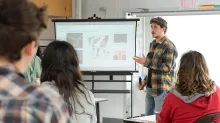
The educational methods are guest lectures. These are interactive classes during which students are shown how to make a homemade seismograph that can be used to detect any ground movement.
Teachers and schools decide whether and how to use the materials, adapt lessons, and integrate them into their teaching.
The programme strengthens children’s understanding of seismic risk, builds practical safety skills, and fosters scientific curiosity, contributing to long-term community resilience.
Vulnerable Groups
Governance
Emergency Preparedness
Infrastructure Readiness
Engagement Level
Empowerment Level
Implementation
- Focus on induced earthquakes, a rare and context-specific hazard
- Child-friendly explanations of induced earthquakes
- Emotional coping integrated into preparedness education
- Homemade seismograph as hands-on learning tool
- Free, publicly available teaching materials
Dutch
Safety Region Groningen (Veiligheidsregio Groningen) and primary schools
Safety Regions in the Netherlands are responsible for disaster response, crisis management, and emergency services coordination.
- Safety Region Groningen
- Hanze University of Applied Sciences (Teacher Training College)
- University of Groningen
- Klassewijzer B.V.
- Bloeii.nu
- Ministry of Economic Affairs and Climate Policy
- National Coordinator Groningen (NCG)
- Institute for Mining Damage Groningen (IMG)
- Primary schools and teachers
- School or teacher requests the programme
- Preparation by teachers or guest educators
- Classroom delivery of the programme
- Reflection and evaluation
- Staff: teacher, possibly guest lecturer
- Financial: public funding and partner contributions
- Classroom materials
The programme is ongoing since 2017, with continuous delivery and updates based on feedback.
Experience of the Implementing Organisation in DRM
Target Audience
Resources Required
Timeframe & Phases
Participation Results
- Importance of accessibility
- Digital availability significantly increases scalability
- Combining emotional and technical learning is crucial for children to cope with disasters
Guest lectures were not accessible to all schools. This was addressed by making all materials freely available online so teachers can implement lessons independently.
The risk of limited reach is mitigated by open-access materials and teacher autonomy.
Risk & Mitigation Plan
Scalability and Sustainability
The guest classes are free, and so the finances are maintained through public funding and contributions from participating governmental organizations and partners.
The solution is specific to the context of Groningen where earthquakes are caused by gas extraction. It can be applied to other regions with similar earthquakes, or would need to be adapted to other types of hazards.
All required information to hold the class is available online, however within the classes themselves technology is not always used a lot.
Staff time, material development, website maintenance.