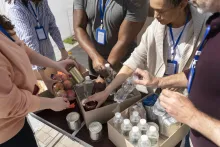
The Disaster Recovery Toolkit for Local Government is a set of eight practical booklets designed to help local councils understand, prepare for, and actively support community recovery after disasters. It is a structured “toolkit” that combines (1) an accessible introduction to the complexity of recovery and its community impacts with (2) actionable guidance, tips, and tools councils can apply in real recovery work.
Map
Disaster Recovery Toolkit for Local Government
General Information
ISIG
The Disaster Recovery Toolkit for Local Government is a modular guide that helps local authorities prepare for, manage, and sustain disaster recovery across the full recovery timeline.
It is structured across three time horizons - recovery readiness before a disaster, actions in the first days and weeks after impact, and recovery planning over the months and years ahead, supported by cross-cutting guidance on organisational challenges for councils, regional coordination through recovery networks, community-led recovery engagement, and practical tools and resources for decision-making and planning.
This toolkit was developed in the context of major bushfire impacts in 2009, and was funded by the Victorian Department of State Development, Business and Innovation to support a professional development strategy delivered across ten local councils most affected by the 2009 bushfires.
The material reflects the reality that disasters do not follow municipal boundaries and that councils benefit from shared approaches and cross-municipal collaboration through regional recovery networks.
The toolkit sits within a broader legal/organisational setting where councils have defined emergency management responsibilities (e.g., maintaining municipal emergency management planning and resource coordination roles).
Hazard Type
Geographical Scope - Nuts
Geographical Scope
Population Size
Population Density
Needs Addressed
Local governments often face a consistent set of challenges in disaster recovery: recovery work begins before the disaster occurs; early recovery decisions strongly shape longer-term outcomes; and councils must manage complex community needs while also keeping their own organisation functioning. This toolkit addresses those needs by providing a structured recovery approach across timeframes (readiness → first days/weeks → months/years) and by focusing on the practical factors that contribute to recovery success, including organisational readiness, decision-making tools, regional collaboration, and effective community engagement.
The toolkit is aimed at council decision-makers and staff rather than targeting a specific vulnerable population group. The solution does not explicitly list particular vulnerable groups as a primary target group for this solution.
This toolkit is suitable for multiple governance arrangements, because it is a reusable guidance set rather than a single place-bound intervention. It can be implemented through:
- Centralized governance, where national or regional authorities issue recovery guidance and require/encourage adoption by local governments;
- Decentralized governance, where municipalities/local authorities adopt the toolkit voluntarily and embed it in local planning and training; and/or
- Multistakeholder governance, where local authorities implement the toolkit in coordination with regional networks, civil society partners, and community stakeholders to deliver inclusive, community-supported recovery.
This solution supports advanced preparedness for disaster recovery at local government level. It provides a structured approach across the full recovery lifecycle: from preparation before an event, to early recovery operations in the first days and weeks, and into medium- and long-term recovery planning over months and years, while also addressing council organisational challenges, regional coordination, and community-led recovery engagement.
This solution is adaptable to different infrastructure levels because it is primarily a planning, coordination, and capacity-building toolkit rather than a capital-intensive intervention. Implementation mainly requires:
- basic administrative and coordination capacity within local government (staff roles, planning routines, documentation),
- the ability to convene stakeholders and run recovery planning processes, and
- access to basic digital/printing capability to use and circulate the guidance and tools.
Where local infrastructure systems are more developed (digital governance systems, established coordination mechanisms, regional networks), the toolkit can be implemented more comprehensively, but it can still be used in lower-infrastructure contexts as a structured baseline for improving recovery readiness.
Engagement is used to support community-led recovery and improve recovery outcomes by strengthening trust, coordination, and shared problem-solving between councils, affected communities, and regional partners. The toolkit aims to help councils engage earlier and more effectively so recovery planning reflects local needs and priorities and remains workable over the months and years after a disaster.
Engagement is supported through practical guidance for councils on how to work with communities during recovery, including approaches to involving community voices in recovery planning and coordinating with regional recovery networks to address shared challenges and align actions across municipalities.
Decision-making sits primarily with councils and relevant government partners, but the toolkit emphasizes improving how councils enable community participation and support community-led recovery. Community influence is strengthened through structured engagement and by embedding local needs and priorities into recovery planning and implementation.
The solution builds long-term recovery capability by strengthening council readiness before disasters, improving early recovery decision-making in the first days and weeks, and supporting structured recovery planning over the months and years that follow. It also builds collaborative capacity by promoting regional recovery networks and providing tools that support consistent decision-making and planning across the recovery lifecycle.
Vulnerable Groups
Governance
Emergency Preparedness
Engagement Level
Empowerment Level
Implementation
This solution provides a structured recovery framework for councils that covers the full recovery lifecycle and the organisational realities of local government recovery delivery. It is packaged as eight connected booklets that councils can use as a complete set or as standalone guidance depending on need.
Its practical value lies in translating recovery into implementable actions: it targets recovery readiness before disasters, early-phase recovery decisions in the first days and weeks, and the embedding of recovery success factors into medium- and long-term recovery planning.
It also recognizes that recovery requires councils to manage internal organisational pressures (workforce planning and resource management) while supporting community recovery outcomes.
English
Developed by a state-level emergency management/public governance context, this toolkit can be implemented in other contexts by organisations such as:
- local governments/municipalities and their recovery teams,
- national or regional emergency management agencies responsible for recovery guidance,
- regional coordination bodies (e.g., regional recovery networks), and
- local government associations or training bodies supporting municipal capacity building.
Implementation is typically anchored in the local authority responsible for recovery coordination, with supporting roles from regional and sector partners depending on the governance model.
This solution is designed to be implemented by organisations with practical roles in disaster recovery planning and coordination - typically local governments and emergency management authorities. These organisations generally have established DRRM responsibilities (planning, coordination, community engagement, continuity management) and can use the toolkit to standardise and strengthen recovery readiness and recovery delivery across events.
- Local councils (councillors, senior managers, emergency management personnel, and relevant staff) as the primary users and implementers of guidance.
- Regional recovery networks that enable councils to collaborate and solve shared recovery challenges across municipal boundaries.
- Local communities affected by disasters, engaged through community-led recovery and council-led engagement practices.
- Cross-sector partners involved in recovery planning and delivery (implied through recovery coordination and network approaches; not itemized as a formal stakeholder list in the toolkit overview).
- Read the foundational booklet to establish a shared understanding of disaster recovery and the role of councils.
- Use the Recovery readiness guidance to strengthen pre-disaster readiness and improve factors that contribute to recovery success.
- Apply the first days and weeks booklet to guide immediate recovery actions and decisions after impact.
- Use months and years ahead to embed recovery success factors into structured medium-/long-term recovery planning.
- Use Council business matters to manage workforce planning and resource management challenges from preparation through post-disaster recovery.
- Coordinate across municipalities using regional recovery networks to share solutions and align actions where disasters cross boundaries.
- Apply Engaging the community to support community-led recovery and improve the effectiveness of engagement throughout recovery.
- Use Recovery tools and other resources to support decision-making and planning and to access additional readings/resources
Primarily low-cost resources focused on capacity and process: staff time for planning and readiness work, leadership attention and governance capacity, and the ability to coordinate across council departments and regional networks. The toolkit is designed to supplement municipal emergency management planning rather than requiring new technology or infrastructure.
The toolkit is explicitly phased across the recovery timeline: pre-disaster recovery readiness, first days and weeks, and months and years ahead, supported by cross-cutting organisational and engagement components.
Experience of the Implementing Organisation in DRM
Target Audience
Resources Required
Timeframe & Phases
Participation Results
The solution's structure reflects key lessons: (1) recovery outcomes improve when readiness is built before disasters; (2) early recovery choices shape long-term outcomes and require dedicated guidance; (3) councils must manage internal workforce/resource challenges while supporting community recovery; and (4) regional cooperation and community-led engagement are critical to recovery success.
Recovery is complex and long-term, and councils must operate under uncertainty while balancing urgent community needs with internal organisational pressures. This solution addresses those challenges by providing step-by-step guidance that distinguishes early recovery decisions from long-term recovery planning and embeds recovery success factors across phases.
It also supports adaptation by offering a regional cooperation model (recovery networks) to solve shared challenges and by providing tailored guidance on community engagement to support community-led recovery.
This solution supports general preparedness for recovery and is designed to be applied across disaster types. It strengthens mitigation indirectly by improving recovery readiness, decision-making and planning capability, and cross-municipal coordination—factors that reduce long-term harm and support faster, more equitable recovery outcomes.
Risk & Mitigation Plan
Scalability and Sustainability
The toolkit is sustainable because it is a reusable governance and capability resource: once adopted, it can be integrated into existing municipal planning and training routines, updated locally through practice, and re-used across events. It supports institutional memory by giving councils a consistent structure for readiness, early recovery actions, and long-term recovery planning.
The solution scales well because it is modular: councils can use the full set or focus on the booklet most relevant to their recovery stage and organisational needs.
It is also adaptable across hazards and across local contexts because it focuses on recovery success factors, governance, and planning rather than hazard-specific technical measures. It can also be adapted beyond Victoria, but requires localization to the relevant legal/governance framework for local government roles, recovery structures, and coordination arrangements.
Innovation is primarily methodological and organisational. The toolkit provides a structured recovery approach, planning supports, and decision-making tools, rather than relying on new technology.
Direct costs are typically low and mostly relate to initial adoption and setup, such as:
- staff time to read, adapt, and integrate the toolkit into existing municipal emergency management and recovery plans,
- initial onboarding/training sessions or workshops to familiarise key staff with the toolkit,
- basic production costs (printing/formatting, internal templates, translating/localising if needed),
- one-off facilitation support (optional) to tailor the toolkit to local governance arrangements and roles.
Note: No public budget figure for the original development of the toolkit was found; the direct costs described above refer to implementation by a city/region adopting the toolkit.
Operational costs are ongoing and depend on how seriously the toolkit is embedded into routine recovery readiness and recovery management, including:
- recurring staff time for coordination, stakeholder engagement, and maintaining recovery readiness arrangements,
- running exercises/drills, reviewing and updating recovery procedures, and maintaining institutional memory,
- continued engagement activity costs (meetings, community engagement, communications, documentation),
- during an actual event: increased administration and coordination workload, workforce planning, and resource management demands as recovery progresses over weeks/months/years.
Note: Operational costs are variable and scale with the size of the municipality, the maturity of existing recovery arrangements, and the frequency/severity of disasters.
- Sustainability improves when guidance is designed for re-use across phases.
A modular toolkit that councils can apply before, immediately after, and long after an event supports institutional continuity and reduces “reinventing the wheel” during high-pressure recovery periods. - Co-design with implementers increases long-term adoption.
The toolkit’s development approach of trialling content and incorporating council and stakeholder feedback, reflects a sustainability lesson: tools built with end-users are more likely to be used, retained, and embedded in routine planning and training cycles. - Keeping resources ‘alive’ through updates is a core sustainability mechanism.
Public pages indicate the toolkit is being updated and planned to integrate into a broader Local Government Emergency Management Toolkit, suggesting an explicit sustainability pathway: refresh content, maintain relevance, and reduce obsolescence. - Financial sustainability is helped by low-tech, low-barrier distribution.
Making resources openly accessible (downloadable guidance and tools) supports long-term usability and replication without requiring councils to procure specialized systems, shifting sustainability from capital costs to governance capacity and staff time.