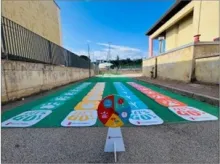
The initiative addresses the growing need for disaster risk reduction education among children and adolescents. Starting in 2025, the project was implemented in several Punti Luce, non-formal education centers located in disadvantaged suburbs, to strengthen resilience and safety behaviors in vulnerable communities. The program combines interactive workshops with innovative tools like Feel Safe VR, offering immersive multi-risk scenarios (flood, earthquake, wildfire) designed for inclusivity, including adaptations for visual, auditory, and cognitive disabilities. Activities focus on experiential learning, problem-solving, and active citizenship, supported by play-based methods and digital resources from the Feel Safe platform.
Map
Feel Safe nei Punti Luce
General Information
The project consists of three structured workshops: Explore (building awareness of risk and resilience through storytelling and games), Experience (role-playing emergency scenarios to practice safe behaviors), and Participate (hands-on engagement via VR or the dynamic team game “Corri il Rischio”). The initiative equips children with practical skills for emergency preparedness and fosters collaboration, decision-making, and climate crisis awareness, positioning Feel Safe as a pioneering model for integrating technology and education in resilience-building.
The initiative responds to the increasing frequency and intensity of emergencies and climate-related disasters, combined with the lack of structured disaster risk reduction education for children in Italy and Europe. Children and adolescents are among the most vulnerable groups, making it essential to start from the educational community to build resilience through continuous learning and preparedness.
Hazard Type
Geographical Scope - Nuts
Geographical Scope
Population Size
Population Density
Needs Addressed
The initistive addresses the growing frequency and intensity of emergencies and climate-related disasters, coupled with the lack of structured disaster risk reduction education for children and adolescents in Italy and Europe. These young people represent one of the most vulnerable groups during crises, yet they often have minimal exposure to preparedness programs. The project seeks to close this gap by introducing innovative, inclusive, and experiential learning approaches that build resilience and promote safe behaviors.
The vulnerable groups targeted are primarily children and adolescents living in disadvantaged communities served by Punti Luce.
The communties addressed by the project typically lack formal disaster risk management plans, and the initiative introduces foundational concepts such as risk awareness, resilience, and safe behaviors. Through interactive workshops and immersive technologies, the program aims to move participants from minimal awareness toward structured preparedness, laying the groundwork for more organized responses in the future.
The activities are conducted within existing community spaces, such as Punti Luce centers, without the need for advanced resilient infrastructure. The emphasis is on educational content and digital tools rather than physical upgrades, making the program accessible and scalable across diverse settings.
The purpose of engagement is to empower minors as active agents of resilience rather than passive recipients of information. By involving them in experiential learning and decision-making processes, the initiative builds practical skills for emergency preparedness and encourages behaviors that contribute to community safety.
The method of engagement combines dialogue, participation, and hands-on activities, using storytelling, role-play, and immersive technologies to create an inclusive and interactive learning environment.
The initiative considers children and adolescents as active participants in shaping their learning experience. Through interactive workshops and immersive VR simulations, they are encouraged to make decisions in simulated emergency scenarios, practice problem-solving, and collaborate with peers. This approach gives them a sense of agency and responsibility, allowing them to influence outcomes within the learning environment. By involving them in role-play and experiential activities, the project fosters confidence in decision-making and builds the foundation for informed choices during real-life emergencies.
The program equips participants with practical knowledge and transferable skills such as communication, collaboration, and risk analysis, which extend beyond the immediate context of disaster preparedness. By integrating inclusive technologies like VR and participatory methodologies, the project ensures that learning is engaging and sustainable. These experiences aim to create lasting behavioral change and strengthen resilience within communities, enabling children to become proactive agents of safety and preparedness. The emphasis on inclusivity and experiential learning also supports long-term empowerment by ensuring that all participants, including those with disabilities, can fully engage and benefit from the program.
Vulnerable Groups
Governance
Emergency Preparedness
Infrastructure Readiness
Engagement Level
Empowerment Level
Implementation
The main innovations of the Feel Safe initiative is its integration of immersive technologies like Virtual Reality into disaster risk reduction education, ensuring inclusivity for children with visual, auditory, and cognitive disabilities. The program combines experiential learning with gamification, using tools such as VR multi-risk scenarios and the interactive game “Corri il rischio.” Its methodology emphasizes participatory workshops structured in three phases—knowledge building, role-play, and active engagement—creating a dynamic and engaging approach to resilience education.
Italian
Save the Children Italia
Save the Children Italia has a high level of experience in Disaster Risk Management (DRM), particularly in supporting children during emergencies. More specifically, the work of the Emergecy Unit of Save the Children Italia spans all DRM phases: mitigation and prevention through disaster-risk education, preparedness via training and planning, response with immediate aid and psychosocial support, and recovery through safe spaces, education continuity, and child protection. They have extensive experience in national emergencies, such as the 2016–2017 Central Italy earthquakes, and collaborate closely with civil protection authorities. Additionally, they develop practical manuals and toolkits for frontline staff, demonstrating their capacity to translate DRM principles into actionable interventions for children in both acute and longer-term emergency contexts.
The actors involved include:
- Save the Children – Area Emergenze & Povertà Educativa Program: ensure strategic alignment and integration with broader educational initiatives aimed at combating educational poverty.
- Local Educators and Facilitators in Punti Luce Centers: responsible for delivering workshops and activities directly to children and families, creating safe spaces for learning and engagement.
- Community Stakeholders and Families: play a key role in engagement and participation, offering feedback and fostering a collaborative environment that reflects local needs.
Implementation steps include:
- Assess needs in each Punto Luce to highlight specific vulnerabilities and needs
- Ensure child-friendly and secure environments where to conduct the activities.
- Develop interactive, age-appropriate workshop based on the Feel Safe methodology (Explore-Experience-Participate)
- Collect feedbacks and suggestions
- Document best practices for replication in other centers.
The implementation will combine digital tools, such as VR content and platform resources, with locally available materials like printed resources, cooperative game kits, and analog simulation tools. This blended approach leverages the strengths of immersive technology to enhance experiential learning while maintaining flexibility and inclusivity.
The initiative is organized into clear stages: initial design and testing of VR scenarios, preparation of educational content, and delivery of workshops in three distinct phases—Explore, Experience and Participate. Each phase has defined objectives and activities, supported by scheduled rollouts across multiple Punti Luce locations. While monitoring and evaluation are present, the framework focuses primarily on structured implementation rather than comprehensive long-term monitoring.
Experience of the Implementing Organisation in DRM
Target Audience
Resources Required
Timeframe & Phases
Participation Results
Feel Safe nei Punti Luce program highlights the importance of flexibility and inclusivity in resilience education. The project demonstrated that immersive technologies like VR significantly enhance engagement and understanding, but they require strong accessibility measures and logistical planning. It also showed that analog alternatives, such as cooperative games and role-play, are essential for continuity when technology is limited. Another key lesson is that participatory methods where children actively contribute to scenarios and decision-making build ownership and long-term behavioral change. Finally, systematic feedback collection and documentation of best practices proved critical for scaling and replicating the model across different centers.
Challenges in implementing these steps often stem from the diversity of local contexts and limited resources. Adaptive strategies focus on flexibility and inclusivity. Needs assessments are simplified through participatory mapping and quick surveys, while partnerships with local actors help create safe spaces at low cost. Modular workshop activities tailored to different ages and abilities maintain engagement, and feedback is gathered through interactive methods like group discussions and visual rating tools. Best practices are captured using standardized templates and photo-based storytelling, making replication easier and ensuring knowledge sharing across centers.
The program tailors activities to the specific vulnerabilities and needs identified in each Punto Luce. By conducting local assessments and customizing workshops, the initiative ensures that risk education is relevant and practical for the community context. While multi-hazard scenarios are included in VR and role-play exercises, the strategy remains focused on adapting content and methods to local realities rather than implementing a broad, national-level plan.
Risk & Mitigation Plan
Scalability and Sustainability
The initiative is based on leveraging existing community structures (Punti Luce) and local educators while integrating adaptable educational content. This ensures continuity without heavy reliance on external resources. By documenting best practices and using modular workshop designs, the program can be maintained and replicated with minimal additional investment, making it sustainable in the long term.
Scalability and adaptabiliry stringly relie on the Explore, Experience, Participate methodology. Such methodology is, indeed, flexible and can be applied in different contexts, from urban to rural settings. The program can scale horizontally to other Punti Luce or similar community centers and adapt vertically by incorporating or removing technological components like VR depending on resource availability. Its inclusive design also allows adaptation for children with disabilities, reinforcing its versatility.
The Feel Safe initiative does not simply use technology; it uses it strategically and flexibly to meet diverse needs. The VR component is advanced and immersive, offering realistic multi-risk scenarios that enhance decision-making and engagement. However, the program is designed so that if VR hardware or connectivity is unavailable, facilitators can switch to analog methods like role-play, cooperative games, and storytelling without compromising learning outcomes. This adaptability makes the solution resilient to resource constraints and contextual differences. Moreover, the technology itself is adaptive by design. VR scenarios include accessibility features for children with visual, auditory, and cognitive disabilities, ensuring that innovation does not create barriers. The program also integrates feedback loops to continuously improve usability and engagement, demonstrating a dynamic approach rather than a static technological deployment.
Direct costs primarily include the procurement of VR headsets and related hardware, and preinted materials for analogic activities.
Operational costs involve facilitator training, workshop delivery, maintenance of VR equipment, and periodic updates to content. When VR is not used, operational costs drop significantly, relying mainly on printed materials, games, and facilitator time, which can be absorbed locally.
A key lesson learned from this implementation is the importance of cost-flexibility and resource optimization. While technology adds value through engagement and realism, it also introduces financial and logistical challenges. The project demonstrated that maintaining analog alternatives ensures continuity and scalability even in low-resource settings. This dual approach allows the initiative to remain resilient against funding fluctuations and infrastructure limitations, proving that sustainability depends not only on financial planning but also on designing adaptable methodologies that work across diverse contexts.