
“Who’s most at risk?” is a tested and freely available educational toolkit consisting of teacher’s notes, pupil activity sheets, character profiles, key-word lists, chance cards and hazard scenario cards. It supports a 15–20 minute role-play in which pupils adopt the identities of people living in different parts of the world and physically move forwards or backwards according to statements about age, income, education, housing, disability, location and access to information or savings.
Limited
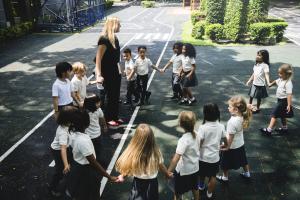
The toolkit is aimed at school disaster management, risk prevention, and community awareness. It contains three integrated parts, which are a Participatory School Disaster Management handbook, a school disaster management plan form templates for school use and annual review, and student & community participatory activities.
It is designed to be updated over time (ring-binder approach) and adapted to different contexts.
Solution
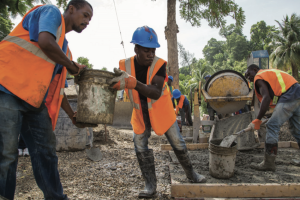
The CBDRR approach developed by Solidarités International is a participatory methodology that places affected communities at the centre of disaster risk analysis, planning, and action. It combines local knowledge with technical expertise to identify hazards, vulnerabilities, and capacities, and translates this shared analysis into concrete preparedness, mitigation, and response measures implemented at community level.
Solution
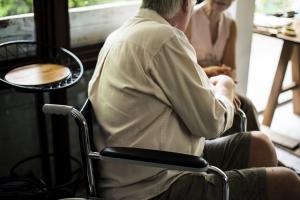
The case illustrates how disability-inclusive DRR has been advanced in Vanuatu by shifting from ad-hoc inclusion to more systematic engagement of persons with disabilities and their representative organisations in preparedness, response planning, and community decision-making.
Case
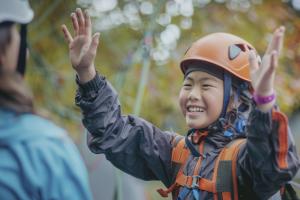
The Framework on Community-Based Disaster Risk Management establishes a standardized yet adaptable approach for engaging Vietnamese communities in assessing risks, planning preparedness measures, and implementing locally appropriate disaster risk reduction actions.
Case
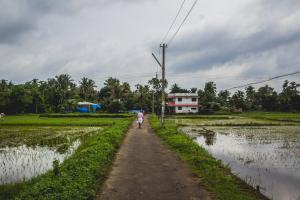
The Cyclone Preparedness Programme is a joint initiative of the Government of Bangladesh and the Bangladesh Red Crescent Society, combining state early warning systems with last-mile, volunteer-led community action to ensure timely evacuation, preparedness, and lifesaving response in cyclone-prone coastal areas.
Case
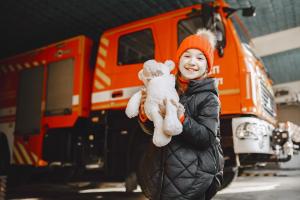
Bjørnis is a child-centred risk communication and psychosocial support initiative that uses a firefighter teddy bear to reduce fear, support emotional regulation, and improve children’s understanding of emergencies and safety behaviours.
Case
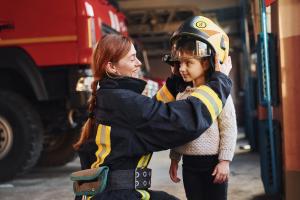
A nationwide, recurring fire-risk awareness and prevention campaign that uses experiential learning and direct interaction with firefighters to improve household preparedness and reduce fire-related injuries and damage.
Case
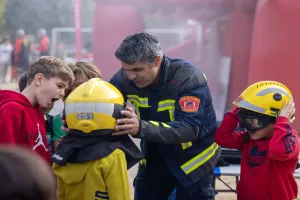
A nationwide, recurring fire-risk awareness and prevention campaign that uses experiential learning and direct interaction with firefighters to improve household preparedness and reduce fire-related injuries and damage.
Contribution
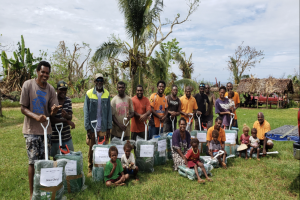
The case illustrates how disability-inclusive DRR has been advanced in Vanuatu by shifting from ad-hoc inclusion to more systematic engagement of persons with disabilities and their representative organisations in preparedness, response planning, and community decision-making.
Contribution