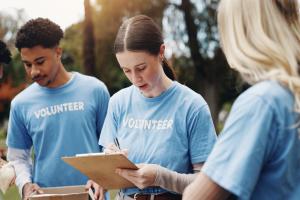
The Student Volunteer Army (SVA) is a youth-led, university- and school-based volunteer initiative in New Zealand, focused on building resilient communities through crisis response and ongoing community support. The organisation mobilises tens of thousands of volunteers to assist communities during and after disasters, while cultivating a culture of service and leadership among young people. Partnerships with organisations and funders amplify SVA’s reach and impact.
Partnership
Ready.gov provides a comprehensive framework for individual and community preparedness, focusing on four pillars: staying informed, making a plan, building a kit, and getting involved.
Contribution
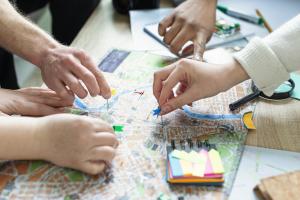
ARC’s CBDP toolkit helps communities turn data on risks, vulnerabilities, and capacities into a practical disaster preparedness and response plan. It was developed in Afghanistan, where poverty, weak infrastructure, and environmental degradation increase the impact of floods, droughts, landslides, and other hazards. The approach is participatory (focus groups, observation, feedback) and involves local structures such as the CDMC/CDC, with actions phased into emergency, short, medium, and long-term. It also integrates environmental aspects and climate projections.
Solution
The Territori Aperti Disaster Preparedness Toolkit is a dynamic tool that gathers existing experiences and transforms them into useful recommendations and procedures for public bodies and citizens.
Solution
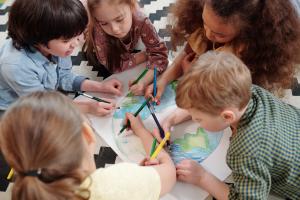
This guide provides practical strategies for engaging children as active participants in disaster risk reduction. It frames children not merely as vulnerable groups but as agents capable of contributing ideas, identifying risks, and supporting community preparedness. Through participatory methods, case studies, and hands-on activities, the guide demonstrates how children can be meaningfully involved in planning, prevention, and resilience-building at the community level.
Solution
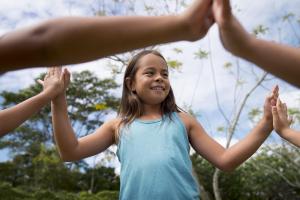
This manual presents the results of the work carried out within the CUIDAR project (Horizon 2020), focused on promoting a disaster resilience culture that actively includes children and adolescents. The manual documents activities conducted in Italy, Spain, Portugal, Greece, and the United Kingdom, showing how young people are not only vulnerable subjects but can also become key actors in disaster prevention, preparedness, and response.
Solution
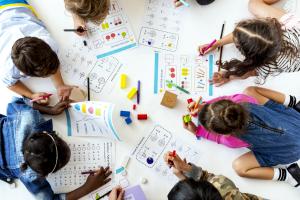
This manual represents a practical and concrete support to all operators working in emergency settings in carrying out educational activities with children and adolescents in emergency situations.
Due to its sudden nature, an emergency disrupts and significantly alters the daily life and linearity of educational interventions. It is therefore crucial to restore routine and the psycho-physical well-being of the children involved.
Solution
A structured system where Japanese municipalities and welfare institutions create personalized evacuation strategies for vulnerable people, verified through inclusive drills and coordinated with local support networks.
Contribution
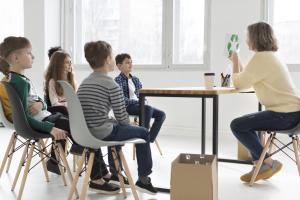
The project consists of three structured workshops: Explore (building awareness of risk and resilience through storytelling and games), Experience (role-playing emergency scenarios to practice safe behaviors), and Participate (hands-on engagement via VR or the dynamic team game “Corri il Rischio”). The initiative equips children with practical skills for emergency preparedness and fosters collaboration, decision-making, and climate crisis awareness, positioning Feel Safe as a pioneering model for integrating technology and education in resilience-building.
Case
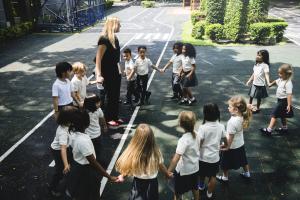
The toolkit is aimed at school disaster management, risk prevention, and community awareness. It contains three integrated parts, which are a Participatory School Disaster Management handbook, a school disaster management plan form templates for school use and annual review, and student & community participatory activities.
It is designed to be updated over time (ring-binder approach) and adapted to different contexts.
Solution