A structured system where Japanese municipalities and welfare institutions create personalized evacuation strategies for vulnerable people, verified through inclusive drills and coordinated with local support networks.
High Crowded
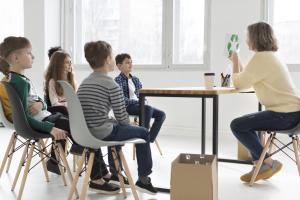
The project consists of three structured workshops: Explore (building awareness of risk and resilience through storytelling and games), Experience (role-playing emergency scenarios to practice safe behaviors), and Participate (hands-on engagement via VR or the dynamic team game “Corri il Rischio”). The initiative equips children with practical skills for emergency preparedness and fosters collaboration, decision-making, and climate crisis awareness, positioning Feel Safe as a pioneering model for integrating technology and education in resilience-building.
Case

“Who’s most at risk?” is a tested and freely available educational toolkit consisting of teacher’s notes, pupil activity sheets, character profiles, key-word lists, chance cards and hazard scenario cards. It supports a 15–20 minute role-play in which pupils adopt the identities of people living in different parts of the world and physically move forwards or backwards according to statements about age, income, education, housing, disability, location and access to information or savings.
Solution
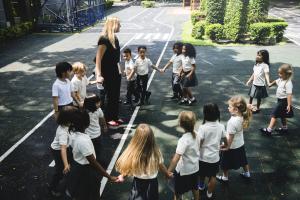
The toolkit is aimed at school disaster management, risk prevention, and community awareness. It contains three integrated parts, which are a Participatory School Disaster Management handbook, a school disaster management plan form templates for school use and annual review, and student & community participatory activities.
It is designed to be updated over time (ring-binder approach) and adapted to different contexts.
Solution
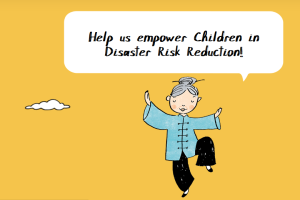
COPE Disaster Champions provides free illustrated children’s books, educational jingles and a digital platform to teach disaster preparedness and risk awareness. Through storytelling, visuals and simple action-oriented messages, the initiative empowers children to understand risks and adopt safe behaviours before, during and after disasters.
Contribution
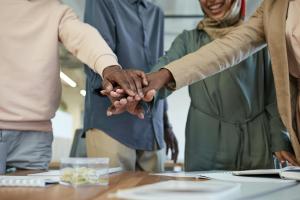
MAG-DER coordinates a standardised neighbourhood disaster volunteer model built on a 36-hour training programme (theory and fieldwork), volunteer team organisation, and “Neighbourhood Disaster Support Centers” (equipment containers) linked via radio to provincial crisis structures, with volunteer-led maintenance and periodic checks.
Case
Safecast designs and deploys open hardware and software tools that enable citizens and experts to collect, share and access high-quality environmental data. Originating from a post-disaster information gap, Safecast promotes transparency, public trust and evidence-based decision-making through open data and community-driven monitoring.
Contribution
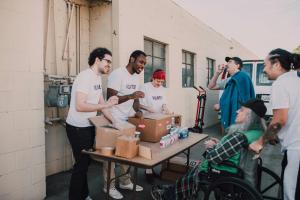
ROHCMUM is a formalised coalition (incorporated since 2007) that convenes community and humanitarian organisations, municipal civil security, and Québec public-safety actors.
It focuses on preparedness and operational coordination for “major disasters,” improving how organisations mobilise, communicate, and deliver support to affected populations.
Its core offer includes structured workshops (initiation, emergency measures plan, business continuity, mobilisation/coordination) facilitated by specialists.
Case
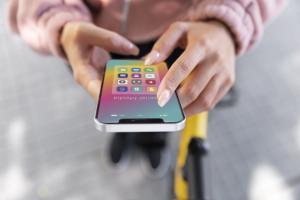
Safety tips combines a traveler-focused safety website and a push-alert smartphone app to help people in Japan react quickly during hazards.
It provides multilingual alerts (e.g., earthquake/tsunami/weather) and practical guidance such as evacuation flowcharts and helpful phrases for communicating locally.
The emergency section organizes procedures to follow for multiple scenarios (earthquake, tsunami warnings, evacuation information, volcanic warnings, heat stroke alerts).
Solution
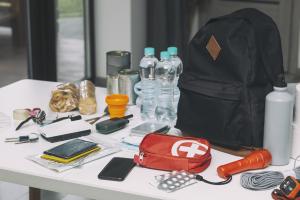
Get Ready (NEMA - New Zealand) is a national preparedness platform that offers practical instructions for preparing for and responding to multi-risk emergencies (before, during, and after).
The site addresses the problem of low self-sufficiency in a crisis, promoting family/community plans, kits, and supplies (e.g., water and grab bags). It includes specific guidance for vulnerable groups (disabilities, the elderly, children) and pets, with accessible and multilingual resources.
Case