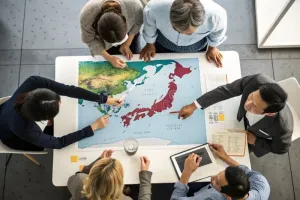
After the 1995 Kobe earthquake, residents of North Rokko used the participatory Machizukuri model to create alternative reconstruction plans, forming neighbourhood associations that strengthened community resilience and civic engagement.
Lessons learned / Practical Example

Structured collaboration among stakeholders to enhance community resilience
Case
A city programme in Cali, Colombia, that trains residents living beside the Cauca River flood dike to look after it and raise awareness among their neighbours. Called Guardianes del Jarillón, it is the community-governance line of the Plan Jarillón, the programme that is reinforcing the 26.1 km dike and resettling the 8,777 households that lived on it after the 2010–2011 floods.
Contribution
A two-year pilot in which seven US neighbourhoods worked home by home to reduce wildfire risk, with most households taking part.
Contribution
A low-cost network of sensors built from open hardware that sends flood and mudflow alerts to officials and community leaders in Chosica, Peru.
Contribution
In 2015-2016, residents of 19 communities in Escoma, Bolivia, mapped flood-prone areas with the municipality to build a local flood early warning system.
Contribution
A community flood early warning system was built in Querecotillo, Peru, in 2016, with residents mapping flood zones and rehearsing an evacuation drill. CIIFEN worked with the municipality, the civil defence institute INDECI and the weather service SENAMHI between January and September 2016.
Contribution
Residents of two flood-prone communities in Chad described how they already warn each other and prepare for floods, and what support they want.
Contribution
The Zambia Red Cross acted on a flood forecast in January 2023 to warn and equip households in Kitwe and Kafue before the water arrived.
Contribution
In November 2023, communities in Butaleja and Mbale, Uganda, dug drainage ditches and reinforced flood barriers before forecast floods, supported by the Uganda Red Cross Society.
Contribution