Municipal initiative integrating persons with disabilities into DRR and infrastructure planning through disaggregated data collection, workshops with caregivers and disability organisations, and a permanent communication forum linking communities and municipal departments.
Basic Strategy

“Mettiamoci al sicuro — Conto su di te” (“Let’s Get to Safety — I’m Counting on You”) is a Civil Protection project designed for schools to teach children and young people how to behave in emergency situations. It was created out of the need to talk about safety in a simple, positive, and non-alarming way.
Case
“Mettiamoci al sicuro — Conto su di te” (“Let’s Get to Safety — I’m Counting on You”) is a Civil Protection project designed for schools to teach children and young people how to behave in emergency situations. It was created out of the need to talk about safety in a simple, positive, and non-alarming way.
Contribution


“Who’s most at risk?” is a tested and freely available educational toolkit consisting of teacher’s notes, pupil activity sheets, character profiles, key-word lists, chance cards and hazard scenario cards. It supports a 15–20 minute role-play in which pupils adopt the identities of people living in different parts of the world and physically move forwards or backwards according to statements about age, income, education, housing, disability, location and access to information or savings.
Solution

The case illustrates how disability-inclusive DRR has been advanced in Vanuatu by shifting from ad-hoc inclusion to more systematic engagement of persons with disabilities and their representative organisations in preparedness, response planning, and community decision-making.
Case

Bjørnis is a child-centred risk communication and psychosocial support initiative that uses a firefighter teddy bear to reduce fear, support emotional regulation, and improve children’s understanding of emergencies and safety behaviours.
Case
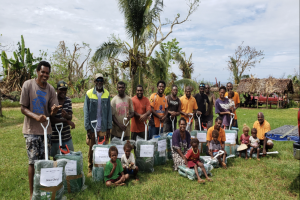
The case illustrates how disability-inclusive DRR has been advanced in Vanuatu by shifting from ad-hoc inclusion to more systematic engagement of persons with disabilities and their representative organisations in preparedness, response planning, and community decision-making.
Contribution