An annual Italian programme that trains young people each year in disaster risk awareness and civil protection through immersive week-long camps.
Emergency Services
A policy and planning toolkit used by education and disaster risk management actors to assess, reduce, and manage risks affecting learners, educators, and education systems. The solution outlines foundations and pillars for systemic action to protect learners, keep schools open during crises, and build resilience through risk education and inclusive safety management.
The CSSF aims to:
Contribution
A global educational simulation that challenges players to act as disaster risk managers, tasking them with protecting communities against imminent natural hazards through strategic planning and resource management. In each 10-20 minute session, players navigate one of five scenarios - tsunami, hurricane, wildfire, earthquake, or flood - where they must decide how to spend a limited budget on structural and non-structural measures.
Contribution
A comprehensive national communication initiative designed to provide Romanian citizens with standardized, life-saving behavioral guidelines for seismic events. The initiative utilizes high-visibility video spots, downloadable educational brochures for schools, and interactive digital content to replace common myths with scientifically backed "correct behaviors." By ensuring that every citizen knows how to "drop, cover, and hold on" and avoid dangerous actions like using elevators or running onto stairs, the campaign builds a culture of national seismic resilience.
Contribution
A comprehensive fire prevention toolkit and guidance system designed to help residents identify and mitigate fire risks within their homes. The solution integrates a physical/digital guide with the "Home Fire Safety Checker," an online tool that categorizes household risk levels. Based on the results, the system offers tailored advice or triggers a professional home fire safety visit from local fire crews. It covers a wide range of hazards, including lithium battery safety, electrical maintenance, and specialized escape protocols for high-rise buildings.
Contribution
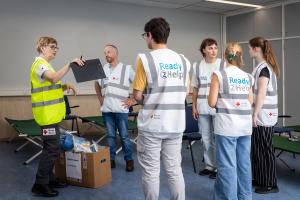
Professional emergency services may, at times, be limited in their response capacity and are often forced to focus their efforts on providing only the most essential assistance. Ready2Help is especially beneficial when a large number of people are quickly needed to provide extra support. This includes physical assistance (e.g. filling sandbags, carrying goods), sheltering groups of people, relieving healthcare personnel or providing assistance by making resources available (e.g. places to sleep or means of transport).
Contribution
The solution provides ready-to-use, scenario-based materials that help organisations simulate cyber incidents and strengthen their response coordination and decision-making capacity. The packages include facilitator guides, scenario narratives, injects, and evaluation tools that enable organisations to conduct structured discussion-based exercises without requiring technical simulation infrastructure.
Contribution
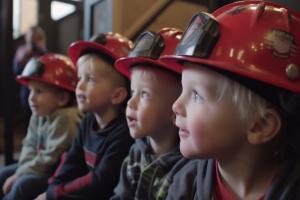
A short video series that teaches kindergarten-age children fire safety through a puppet character and simple, memorable stories.
The episodes explain practical fire prevention and safe behaviour in a child-friendly way and introduce the role of firefighters, fire station equipment, and what happens during an emergency. The series is published online so educators and families can use it repeatedly in classrooms or at home.
Contribution
A modular fire safety education programme for secondary schools that helps teachers build students’ practical knowledge and safer behaviour.
BFireSafe@School provides structured learning content (units/modules) supported by digital components (e-learning/LMS), enabling schools to integrate fire safety into classroom delivery in a consistent and repeatable way. It was developed through a multi-country consortium and is made available in multiple languages to support transferability across education systems.
Contribution
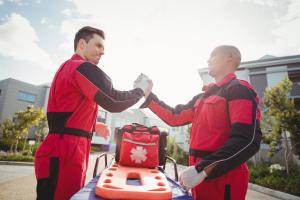
A community training programme that turns residents into organised, trained volunteers who can support emergency response and recovery in their neighbourhoods.
Contribution