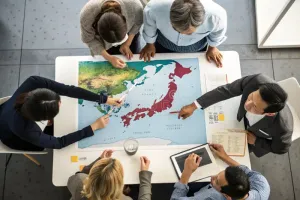
After the 1995 Kobe earthquake, residents of North Rokko used the participatory Machizukuri model to create alternative reconstruction plans, forming neighbourhood associations that strengthened community resilience and civic engagement.
Advanced Resilient
Advanced, resilient infrastructure capable of supporting large-scale response
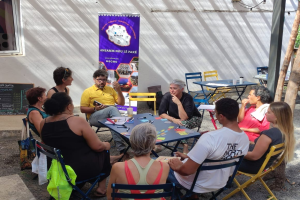
Cette démarche s’inspire de l’expérience québécoise du Regroupement des Organismes Humanitaires et Communautaires pour les Mesures d’Urgence à Montréal (ROHCMUM). Les outils de préparation aux situations d’urgence développés par l’AFPCNT, associés à des ateliers collectifs, permettent aux associations réunionnaises volontaires de réaliser leur Plan de mesures d’urgence et de solidarité.
Contribution
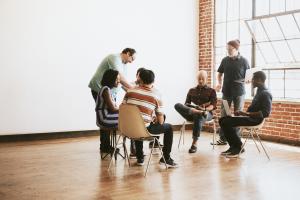
Life Skills is a series of low-threshold workshops by the Netherlands Red Cross supporting migrants, asylum seekers, and undocumented people by providing them with practical skills, boosting their self-reliance, and creating a safe and open space to discuss challenges and concerns with peers.
Case
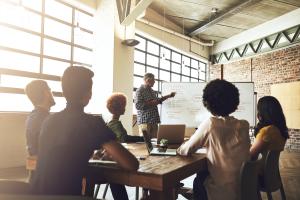
The 'Emergency Awareness' Workshops aims to strengthen people and community preparedness in crises and emergencies. The workshops are designed to align preparedness activities with crises that have a high likelihood and high societal impact: hazardous materials incidents, flooding, extreme weather, blackouts, epidemics and wildfires. The workshops use an interactive, small group serious game to introduce concrete preparedness actions. Participants jointly prepare a fictional persona for an upcoming crisis and later reflect on what these actions mean for their own situation.
Case
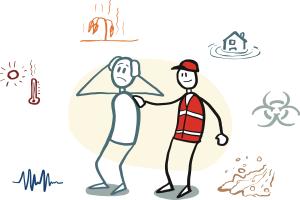
The 'Emergency Awareness' Workshops aims to strengthen people and community preparedness in crises and emergencies. The workshops are designed to align preparedness activities with crises that have a high likelihood and high societal impact: hazardous materials incidents, flooding, extreme weather, blackouts, epidemics and wildfires. The workshops use an interactive, small group serious game to introduce concrete preparedness actions. Participants jointly prepare a fictional persona for an upcoming crisis and later reflect on what these actions mean for their own situation.
Contribution
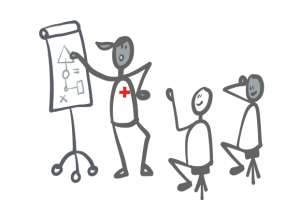
Life Skills is a series of low-threshold workshops by the Netherlands Red Cross supporting migrants, asylum seekers, and undocumented people by providing them with practical skills, boosting their self-reliance, and creating a safe and open space to discuss challenges and concerns with peers.
Contribution

Provides emergency managers and disaster preparedness professionals with practical, step-by-step guidance for designing and conducting simulation exercises that test and strengthen response plans, procedures, and coordination systems across all hazards.
Solution
An annual Italian programme that trains young people each year in disaster risk awareness and civil protection through immersive week-long camps.
Case
A comprehensive digital solution that equips residents and visitors of Estonia with standardized, actionable instructions to prepare for and respond to a wide array of crises, from natural disasters to cyber-attacks. The platform features an interactive household supply checklist, first-aid instructions, and survival guidelines tailored to the Estonian context. Its mobile application is designed to function entirely offline once downloaded, ensuring that citizens have uninterrupted access to life-saving information even during severe power or telecommunications outages.
Solution
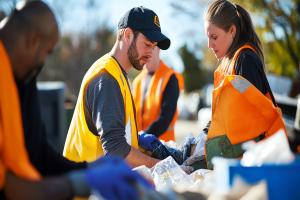
Professional emergency services may, at times, be limited in their response capacity and are often forced to focus their efforts on providing only the most essential assistance. Ready2Help is especially beneficial when a large number of people are quickly needed to provide extra support. This includes physical assistance (e.g. filling sandbags, carrying goods), sheltering groups of people, relieving healthcare personnel or providing assistance by making resources available (e.g. places to sleep or means of transport).
Solution