A two-year pilot in which seven US neighbourhoods worked home by home to reduce wildfire risk, with most households taking part.
Mountainous
In November 2023, communities in Butaleja and Mbale, Uganda, dug drainage ditches and reinforced flood barriers before forecast floods, supported by the Uganda Red Cross Society.
Contribution
Suryodaya connects neighbourhood organisation with municipal disaster risk governance. Its 201 Tole Development Committees support preparedness and community mobilisation, working with ward and municipal authorities. Participatory assessment and planning connect local knowledge with technical risk analysis and municipal action.
Contribution
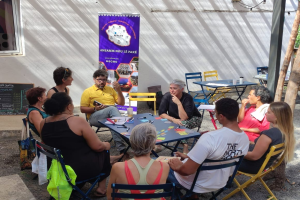
Cette démarche s’inspire de l’expérience québécoise du Regroupement des Organismes Humanitaires et Communautaires pour les Mesures d’Urgence à Montréal (ROHCMUM). Les outils de préparation aux situations d’urgence développés par l’AFPCNT, associés à des ateliers collectifs, permettent aux associations réunionnaises volontaires de réaliser leur Plan de mesures d’urgence et de solidarité.
Contribution
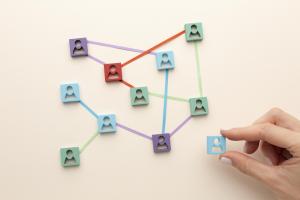
A network coordinating primary and secondary schools to integrate civil protection education into the curriculum through teacher training, age-stratified educational materials, curriculum development, and systematic engagement with civil protection volunteer organizations.
Case
A network coordinating primary and secondary schools to integrate civil protection education into the curriculum through teacher training, age-stratified educational materials, curriculum development, and systematic engagement with civil protection volunteer organizations.
Contribution

Provides emergency managers and disaster preparedness professionals with practical, step-by-step guidance for designing and conducting simulation exercises that test and strengthen response plans, procedures, and coordination systems across all hazards.
Solution

An annual Italian programme that trains young people each year in disaster risk awareness and civil protection through immersive week-long camps.
Case

A policy and planning toolkit used by education and disaster risk management actors to assess, reduce, and manage risks affecting learners, educators, and education systems. The solution outlines foundations and pillars for systemic action to protect learners, keep schools open during crises, and build resilience through risk education and inclusive safety management.
The CSSF aims to:
Solution

A global educational simulation that challenges players to act as disaster risk managers, tasking them with protecting communities against imminent natural hazards through strategic planning and resource management. In each 10-20 minute session, players navigate one of five scenarios - tsunami, hurricane, wildfire, earthquake, or flood - where they must decide how to spend a limited budget on structural and non-structural measures.
Solution