A low-cost network of sensors built from open hardware that sends flood and mudflow alerts to officials and community leaders in Chosica, Peru.
Technologies
A five-step method for building flood early warning systems with local communities, municipalities and national weather and civil defence services in the Andes.
It was developed by CIIFEN, the International Research Centre on El Niño, under the regional programme PRASDES, which Finland’s foreign ministry financed. It joins the four components of early warning set out by the UN disaster-reduction office to an approach of the Organization of American States in which trained community volunteers operate simple rain and river-level instruments.
Contribution

A comprehensive digital solution that equips residents and visitors of Estonia with standardized, actionable instructions to prepare for and respond to a wide array of crises, from natural disasters to cyber-attacks. The platform features an interactive household supply checklist, first-aid instructions, and survival guidelines tailored to the Estonian context. Its mobile application is designed to function entirely offline once downloaded, ensuring that citizens have uninterrupted access to life-saving information even during severe power or telecommunications outages.
Solution

A global educational simulation that challenges players to act as disaster risk managers, tasking them with protecting communities against imminent natural hazards through strategic planning and resource management. In each 10-20 minute session, players navigate one of five scenarios - tsunami, hurricane, wildfire, earthquake, or flood - where they must decide how to spend a limited budget on structural and non-structural measures.
Solution

A comprehensive national communication initiative designed to provide Romanian citizens with standardized, life-saving behavioral guidelines for seismic events. The initiative utilizes high-visibility video spots, downloadable educational brochures for schools, and interactive digital content to replace common myths with scientifically backed "correct behaviors." By ensuring that every citizen knows how to "drop, cover, and hold on" and avoid dangerous actions like using elevators or running onto stairs, the campaign builds a culture of national seismic resilience.
Case

A digital platform and citizen network designed to mobilize local mutual aid and risk awareness through a "Citizen Volunteer" model before, during, and after disasters.
Solution

A primary-school preparedness programme that teaches children what to do in emergencies through interactive lessons and an online game.
Developed by the National Crisis Centre, the programme consists of downloadable interactive teaching kits structured in three levels (aligned with primary education learning objectives), parent brochures to extend learning at home, and a web-based game (“BE-Ready”) that lets pupils practice choices under time pressure in simulated emergencies.
Case
An immersive safety education “experience village” that trains children and seniors to recognise risks and take safer decisions in real-life situations.
Case
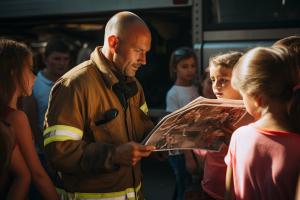
A modular fire safety education programme for secondary schools that helps teachers build students’ practical knowledge and safer behaviour.
BFireSafe@School provides structured learning content (units/modules) supported by digital components (e-learning/LMS), enabling schools to integrate fire safety into classroom delivery in a consistent and repeatable way. It was developed through a multi-country consortium and is made available in multiple languages to support transferability across education systems.
Case
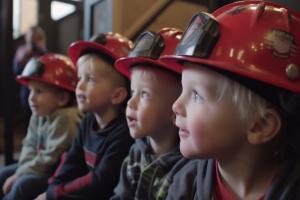
A short video series that teaches kindergarten-age children fire safety through a puppet character and simple, memorable stories.
The episodes explain practical fire prevention and safe behaviour in a child-friendly way and introduce the role of firefighters, fire station equipment, and what happens during an emergency. The series is published online so educators and families can use it repeatedly in classrooms or at home.
Case