A city programme in Cali, Colombia, that trains residents living beside the Cauca River flood dike to look after it and raise awareness among their neighbours. Called Guardianes del Jarillón, it is the community-governance line of the Plan Jarillón, the programme that is reinforcing the 26.1 km dike and resettling the 8,777 households that lived on it after the 2010–2011 floods.
Limited
A two-year pilot in which seven US neighbourhoods worked home by home to reduce wildfire risk, with most households taking part.
Contribution
A five-step method for building flood early warning systems with local communities, municipalities and national weather and civil defence services in the Andes.
It was developed by CIIFEN, the International Research Centre on El Niño, under the regional programme PRASDES, which Finland’s foreign ministry financed. It joins the four components of early warning set out by the UN disaster-reduction office to an approach of the Organization of American States in which trained community volunteers operate simple rain and river-level instruments.
Contribution
In 2015-2016, residents of 19 communities in Escoma, Bolivia, mapped flood-prone areas with the municipality to build a local flood early warning system.
Contribution
A community flood early warning system was built in Querecotillo, Peru, in 2016, with residents mapping flood zones and rehearsing an evacuation drill. CIIFEN worked with the municipality, the civil defence institute INDECI and the weather service SENAMHI between January and September 2016.
Contribution
In November 2023, communities in Butaleja and Mbale, Uganda, dug drainage ditches and reinforced flood barriers before forecast floods, supported by the Uganda Red Cross Society.
Contribution
Before the 2024/25 drought season, farmers in Mbire, Zimbabwe, helped plan and build water and livestock protection measures with Welthungerhilfe and its local partner.
Contribution
Municipal initiative integrating persons with disabilities into DRR and infrastructure planning through disaggregated data collection, workshops with caregivers and disability organisations, and a permanent communication forum linking communities and municipal departments.
Contribution
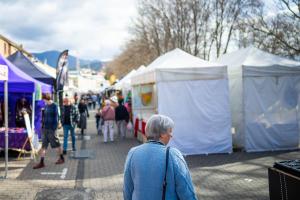
The project titled “Itinerant Civil Protection” (Protezione Civile Intinerante), supported by the Fondazione Cassa di Risparmio di Torino, aims to strengthen the dissemination of Civil Protection culture within the community through actions carried out across the entire municipal territory. It seeks to inform and raise awareness among the population about the risks that could affect the City of Turin, while also encouraging citizens to register for a personalized alert communication system.
Case

“Mettiamoci al sicuro — Conto su di te” (“Let’s Get to Safety — I’m Counting on You”) is a Civil Protection project designed for schools to teach children and young people how to behave in emergency situations. It was created out of the need to talk about safety in a simple, positive, and non-alarming way.
Case