This solution is an institutional textbook designed to provide school teachers with a structured framework for teaching civil protection as part of the compulsory Civic Education course. It offers detailed modules covering the history of the National Civil Protection Service, the scientific basis of diverse hazards, and practical self-protection measures. The textbook serves as an official reference to foster a culture of prevention and community resilience from an early age.
Stable Local
A board-game-based educational toolkit that helps children understand hazards and disaster risk reduction through interactive gameplay and structured learning activities.
Contribution
A printable, facilitator-led game that teaches teenagers practical safety behaviours for floods and wildfires through riddles, cooperative mini-games, and a debrief discussion.
The toolkit places participants in a scenario where they have 30 minutes to support a local councillor by identifying “good practices” for protecting people and reducing risk. It is designed for group play (4–6 participants) with an adult activity leader and ends with a structured debrief to consolidate learning.
Contribution
An immersive safety education “experience village” that trains children and seniors to recognise risks and take safer decisions in real-life situations.
Contribution
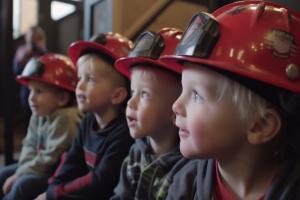
A short video series that teaches kindergarten-age children fire safety through a puppet character and simple, memorable stories.
The episodes explain practical fire prevention and safe behaviour in a child-friendly way and introduce the role of firefighters, fire station equipment, and what happens during an emergency. The series is published online so educators and families can use it repeatedly in classrooms or at home.
Contribution
A modular fire safety education programme for secondary schools that helps teachers build students’ practical knowledge and safer behaviour.
BFireSafe@School provides structured learning content (units/modules) supported by digital components (e-learning/LMS), enabling schools to integrate fire safety into classroom delivery in a consistent and repeatable way. It was developed through a multi-country consortium and is made available in multiple languages to support transferability across education systems.
Contribution

ReBuS provides a structured methodological framework and operational tools to assess community resilience and to guide strategic planning and public action in the context of crises, emergencies, and systemic change, through a holistic, participatory and multi-level approach.
Solution

EDURES provides a comprehensive conceptual and operational toolkit for assessing, planning and strengthening the resilience of educational ecosystems, enabling education authorities and stakeholders to prepare for, respond to and adapt to crises while ensuring continuity, accessibility and democratic values in education.
Solution
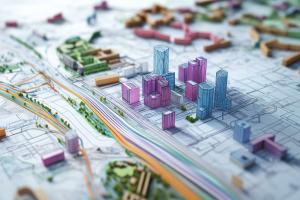
A multi-level assessment tool (Preliminary and Detailed) that allows cities to establish a baseline for resilience, identify gaps in preparedness, and prioritize actions and investments across various sectors.
Solution
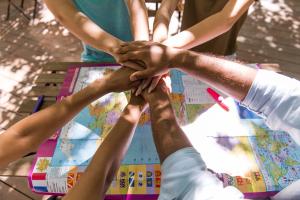
The Palau CBDRR Toolkit strengthens “bottom-up” resilience by linking the national framework and state plans to the community/hamlet level. It covers preparedness topics such as early warning and operational procedures for disseminating alerts. It includes a participatory vulnerability assessment with attention to the needs of vulnerable groups. It promotes community engagement and an organized response through local committees (e.g., search and rescue and relief/assistance).
Solution