High

ARC’s CBDP toolkit helps communities turn data on risks, vulnerabilities, and capacities into a practical disaster preparedness and response plan. It was developed in Afghanistan, where poverty, weak infrastructure, and environmental degradation increase the impact of floods, droughts, landslides, and other hazards. The approach is participatory (focus groups, observation, feedback) and involves local structures such as the CDMC/CDC, with actions phased into emergency, short, medium, and long-term. It also integrates environmental aspects and climate projections.

Solution

The Territori Aperti Disaster Preparedness Toolkit is a dynamic tool that gathers existing experiences and transforms them into useful recommendations and procedures for public bodies and citizens.

Solution

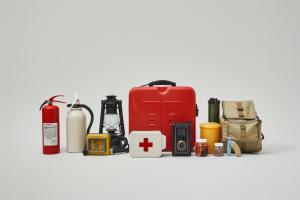
RisKIT is an educational game designed for primary schools that combines learning and fun to raise awareness among children about environmental risks and prevention measures. It includes practical exercises such as creating a risk calendar and an emergency kit, while also integrating knowledge of children’s rights in crisis situations. The goal is to develop collaboration and responsibility skills from an early age.

Solution

The kit consists of four thematic sections:

Solution

Risk Runner is an interactive video game designed for children aged 9 to 12, which transforms learning about safety into a dynamic and fun experience. Through realistic scenarios – such as floods, forest fires, earthquakes, and environmental crisis – players face challenges and mini-quizzes that teach them how to behave correctly in an emergency. The game combines racing and gamification elements with educational content, promoting awareness, prevention and resilience.

Solution

This guide provides practical strategies for engaging children as active participants in disaster risk reduction. It frames children not merely as vulnerable groups but as agents capable of contributing ideas, identifying risks, and supporting community preparedness. Through participatory methods, case studies, and hands-on activities, the guide demonstrates how children can be meaningfully involved in planning, prevention, and resilience-building at the community level.

Solution

This manual presents the results of the work carried out within the CUIDAR project (Horizon 2020), focused on promoting a disaster resilience culture that actively includes children and adolescents. The manual documents activities conducted in Italy, Spain, Portugal, Greece, and the United Kingdom, showing how young people are not only vulnerable subjects but can also become key actors in disaster prevention, preparedness, and response.

Solution

In emergency situations, the rights of children and adolescents risk being violated, ignored, or underestimated due to the need to intervene quickly on aspects related to primary needs. Based on experience gained internationally and in national emergency contexts, Save the Children Italia offers practical recommendations to ensure safety, educational continuity, psychological support, and child participation, emphasizing respect for children’s rights and strengthening community resilience.

Solution

This manual represents a practical and concrete support to all operators working in emergency settings in carrying out educational activities with children and adolescents in emergency situations.

Due to its sudden nature, an emergency disrupts and significantly alters the daily life and linearity of educational interventions. It is therefore crucial to restore routine and the psycho-physical well-being of the children involved.

Solution

The Ritorno Com’E.Ro. project was launched by Save the Children Italia in response to the devastating floods that struck Emilia-Romagna in May 2023. Its primary aim was to restore educational continuity for children and adolescents affected by the disaster, while fostering resilience and awareness of risk prevention within the school community. The initiative ran from November 2023 to May 2024 and involved 54 classes across five schools, reaching more than 1,100 students.

Case