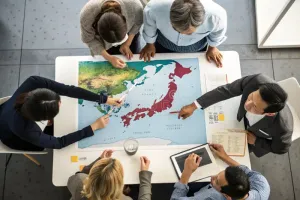
After the 1995 Kobe earthquake, residents of North Rokko used the participatory Machizukuri model to create alternative reconstruction plans, forming neighbourhood associations that strengthened community resilience and civic engagement.
Private Sector and Economy
Structured collaboration among stakeholders to enhance community resilience
Case
A two-year pilot in which seven US neighbourhoods worked home by home to reduce wildfire risk, with most households taking part.
Contribution

The solution provides ready-to-use, scenario-based materials that help organisations simulate cyber incidents and strengthen their response coordination and decision-making capacity. The packages include facilitator guides, scenario narratives, injects, and evaluation tools that enable organisations to conduct structured discussion-based exercises without requiring technical simulation infrastructure.
Solution

A national preparedness campaign that gives the public clear, practical steps to prepare for disasters and emergencies.
Ready.gov offers all-hazards and hazard-specific guidance - plans, supply kits, alerts and warnings, and recovery actions, with dedicated sections for Ready Kids and Ready Business that tailor preparedness actions to schools/families and the private sector.
Case
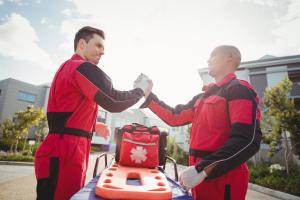
A community training programme that turns residents into organised, trained volunteers who can support emergency response and recovery in their neighbourhoods.
Case
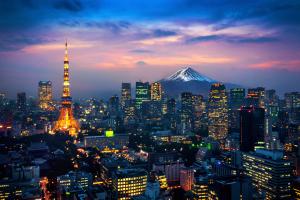
The Tokyo Resilience Project is a city-wide preparedness programme that equips residents with practical tools and learning experiences to improve everyday disaster readiness.
In practice, the project operates as a multi-hazard resilience “umbrella”: it strengthens physical protection (e.g., regulating reservoirs and river measures; coastal protection and sea-level-rise readiness; upgrading buildings and lifelines) while also trying to make preparedness “everyday” through accessible products and outreach. Examples of public-facing outputs include:
Case
The solution provides ready-to-use, scenario-based materials that help organisations simulate cyber incidents and strengthen their response coordination and decision-making capacity. The packages include facilitator guides, scenario narratives, injects, and evaluation tools that enable organisations to conduct structured discussion-based exercises without requiring technical simulation infrastructure.
Contribution
A community training programme that turns residents into organised, trained volunteers who can support emergency response and recovery in their neighbourhoods.
Contribution
The Tokyo Resilience Project is a city-wide preparedness programme that equips residents with practical tools and learning experiences to improve everyday disaster readiness.
In practice, the project operates as a multi-hazard resilience “umbrella”: it strengthens physical protection (e.g., regulating reservoirs and river measures; coastal protection and sea-level-rise readiness; upgrading buildings and lifelines) while also trying to make preparedness “everyday” through accessible products and outreach. Examples of public-facing outputs include:
Contribution