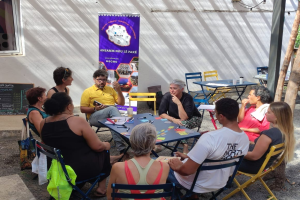
Cette démarche s’inspire de l’expérience québécoise du Regroupement des Organismes Humanitaires et Communautaires pour les Mesures d’Urgence à Montréal (ROHCMUM). Les outils de préparation aux situations d’urgence développés par l’AFPCNT, associés à des ateliers collectifs, permettent aux associations réunionnaises volontaires de réaliser leur Plan de mesures d’urgence et de solidarité.
Tsunamis
A global student-led programme that helps schools embed sustainability and environmental action into their curricula, campus, and communities through a structured Seven Step methodology.
Case
A global student-led programme that helps schools embed sustainability and environmental action into their curricula, campus, and communities through a structured Seven Step methodology.
Contribution
Providing Red Cross/Red Crescent practitioners with a complete project cycle framework and 59 adaptable tools for implementing community and school-based disaster risk education in Small Island Developing States.
Solution
Providing Red Cross/Red Crescent practitioners with a complete project cycle framework and 59 adaptable tools for implementing community and school-based disaster risk education in Small Island Developing States.
Contribution

A global educational simulation that challenges players to act as disaster risk managers, tasking them with protecting communities against imminent natural hazards through strategic planning and resource management. In each 10-20 minute session, players navigate one of five scenarios - tsunami, hurricane, wildfire, earthquake, or flood - where they must decide how to spend a limited budget on structural and non-structural measures.
Solution
This solution is an institutional textbook designed to provide school teachers with a structured framework for teaching civil protection as part of the compulsory Civic Education course. It offers detailed modules covering the history of the National Civil Protection Service, the scientific basis of diverse hazards, and practical self-protection measures. The textbook serves as an official reference to foster a culture of prevention and community resilience from an early age.
Solution
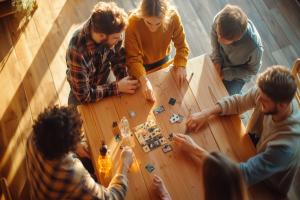
A community-based educational board game that helps participants learn about natural hazards, preparedness actions, and response behaviours relevant to island environments. It is supported by a structured facilitator manual to ensure accurate learning outcomes.
The solution aims to increase disaster risk awareness and preparedness through interactive learning, enabling participants to recognise local hazards, understand appropriate preparedness actions, and discuss risk-reducing behaviours relevant to Seychelles island communities.
Solution
A national preparedness campaign that gives the public clear, practical steps to prepare for disasters and emergencies.
Ready.gov offers all-hazards and hazard-specific guidance - plans, supply kits, alerts and warnings, and recovery actions, with dedicated sections for Ready Kids and Ready Business that tailor preparedness actions to schools/families and the private sector.
Case

The Tokyo Resilience Project is a city-wide preparedness programme that equips residents with practical tools and learning experiences to improve everyday disaster readiness.
In practice, the project operates as a multi-hazard resilience “umbrella”: it strengthens physical protection (e.g., regulating reservoirs and river measures; coastal protection and sea-level-rise readiness; upgrading buildings and lifelines) while also trying to make preparedness “everyday” through accessible products and outreach. Examples of public-facing outputs include:
Case