A printable, facilitator-led game that teaches teenagers practical safety behaviours for floods and wildfires through riddles, cooperative mini-games, and a debrief discussion.
The toolkit places participants in a scenario where they have 30 minutes to support a local councillor by identifying “good practices” for protecting people and reducing risk. It is designed for group play (4–6 participants) with an adult activity leader and ends with a structured debrief to consolidate learning.
Crisis / Risk Communication
Solution
A free, evidence-based educational card game that teaches children aged 6–12 how to prepare for and respond to natural hazards through play.
The resource is intended for classrooms, families, and community/youth groups and is supported by printable game cards, educator support sheets, and short “how to play” videos. The game and support materials were developed using evidence and co-design input from resilience professionals, emergency responders, and education experts, and were play-tested with end users.
Solution

A primary-school preparedness programme that teaches children what to do in emergencies through interactive lessons and an online game.
Developed by the National Crisis Centre, the programme consists of downloadable interactive teaching kits structured in three levels (aligned with primary education learning objectives), parent brochures to extend learning at home, and a web-based game (“BE-Ready”) that lets pupils practice choices under time pressure in simulated emergencies.
Case
An immersive game-based learning experience that teaches disaster risk reduction and climate adaptation through collaborative problem-solving. Participants work together in a three-room installation to solve quizzes and puzzles to make their simulated community more resilient to natural hazards.
Contribution
An immersive safety education “experience village” that trains children and seniors to recognise risks and take safer decisions in real-life situations.
Case
This handbook is a practical tool designed to help educators in Malta teach children and adolescents about disaster preparedness—especially earthquakes—through engaging, inclusive, and age-appropriate activities. Based on the Feel Safe methodology developed by Save the Children Italy, it offers a structured learning pathway (Explore–Experience–Participate), ready-to-use exercises, and guidance on addressing both the technical and emotional dimensions of emergencies.
Solution
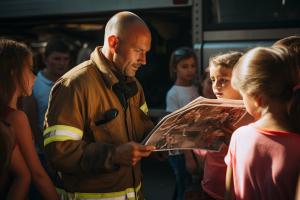
A modular fire safety education programme for secondary schools that helps teachers build students’ practical knowledge and safer behaviour.
BFireSafe@School provides structured learning content (units/modules) supported by digital components (e-learning/LMS), enabling schools to integrate fire safety into classroom delivery in a consistent and repeatable way. It was developed through a multi-country consortium and is made available in multiple languages to support transferability across education systems.
Case

A national preparedness campaign that gives the public clear, practical steps to prepare for disasters and emergencies.
Ready.gov offers all-hazards and hazard-specific guidance - plans, supply kits, alerts and warnings, and recovery actions, with dedicated sections for Ready Kids and Ready Business that tailor preparedness actions to schools/families and the private sector.
Case
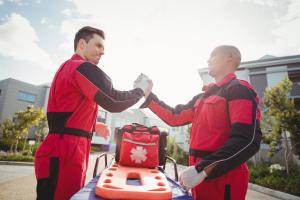
A community training programme that turns residents into organised, trained volunteers who can support emergency response and recovery in their neighbourhoods.
Case
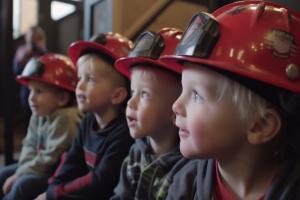
A short video series that teaches kindergarten-age children fire safety through a puppet character and simple, memorable stories.
The episodes explain practical fire prevention and safe behaviour in a child-friendly way and introduce the role of firefighters, fire station equipment, and what happens during an emergency. The series is published online so educators and families can use it repeatedly in classrooms or at home.
Case